
RESEARCH
Hello! Stories from UACJ's Global Sites
[Thailand Edition]
What Does "Working Happily" Mean to Us?
[Thailand Edition]
What Does "Working Happily" Mean to Us?

Featuring
Patcharin Muangin (Oi) – HR Manager, UACJ (Thailand) Co., Ltd.

Featuring
Wilawan Kamkheaw (Ew) – Assistant HR Manager, UACJ (Thailand) Co., Ltd.

Interviewer
Atsushi Watanabe, UACJ

Interviewer
Gao Lei, UACJ
This is the second installment in our series exploring sustainability insights from UACJ's global initiatives. In this edition, we visit UACJ (Thailand) Co., Ltd. in Thailand to learn about the “Happy Workplace Program” and its eight core elements, which is currently being implemented across companies in the country. Through these local initiatives, we take a closer look at what it truly means to “work happily.”

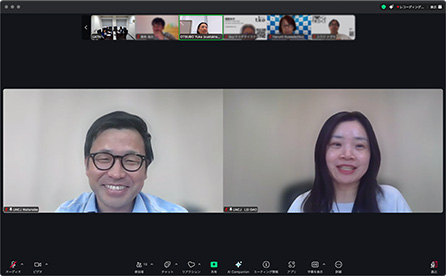
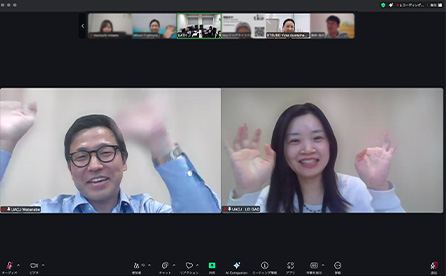
The UACJ Group operates 36 locations around the world. Among them, the production hub for Southeast Asia is UACJ (Thailand) Co., Ltd. (UATH), whose head office and main plant are located in Rayong Province in eastern Thailand. At UATH, a unique initiative called the “Happy Workplace Program” is being implemented to help employees work happily. To learn more about this initiative, Watanabe and Gao from UACJ’s Human Resources Strategy Department sat down for a conversation with the UATH team.
What is the “Happy Workplace Program”?

Oi
It is a nationwide initiative in Thailand—a government-led project aimed at promoting employee health and well-being in the workplace.

Gao
So it’s a program promoted by the government!
Oi
Yes. It is part of a framework announced in 2003 called “Happy8.” Under this concept, companies work on improving workplace environments and employee welfare in various ways.

Watanabe
What exactly does “Happy8” consist of?

Ew
Based on the idea of valuing three layers of happiness—personal happiness, family happiness, and happiness within the local community—Happy8 outlines the following eight elements:
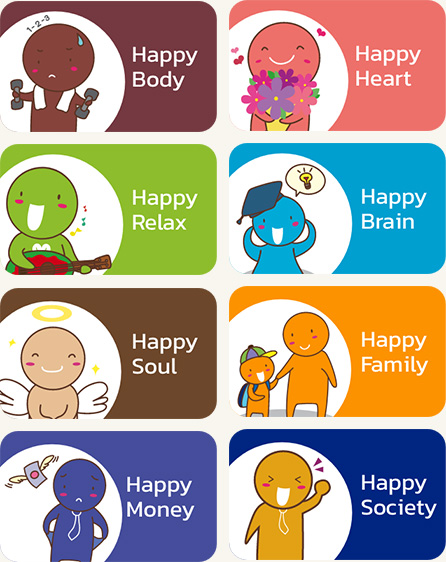
Source : Thai Health Promotion Foundation
https://happy8workplace.thaihealth.or.th/happy-8
https://happy8workplace.thaihealth.or.th/happy-8
Oi
You can think of it as a way of enriching life and living happily.
Watanabe
This is my first time hearing about Happy8. It’s much broader than I expected—it goes beyond physical and mental well-being to include family and finances, too.
Gao
Why did UATH decide to introduce this program in the first place?
Oi
The purpose was to strengthen the bond between the company and its employees.
Watanabe
A “bond,” you mean?
Oi
Yes. When employees feel less stressed, can enjoy their work, and feel supported by their company, they’re able to perform at their best.
Gao
So ultimately, it’s about increasing employee engagement.
Oi
Exactly. Employee happiness directly affects work performance and results. If employees are in good physical and mental health, they can deliver high-quality work and are more likely to generate innovation.
Watanabe
That definitely sounds like it would boost productivity!
Oi
UATH has been promoting various employee-focused initiatives since around 2014, and in recent years, we’ve updated them to align with the Happy8 framework.
Gao
Japan has similar ideas, but it’s fascinating that Thailand promotes this at a national level.
What exactly do you do under this program?
Oi
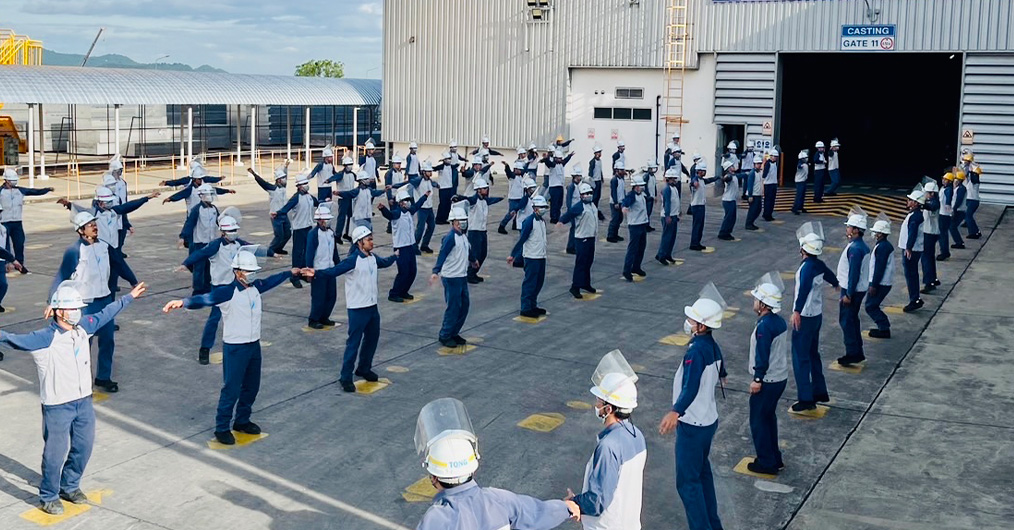
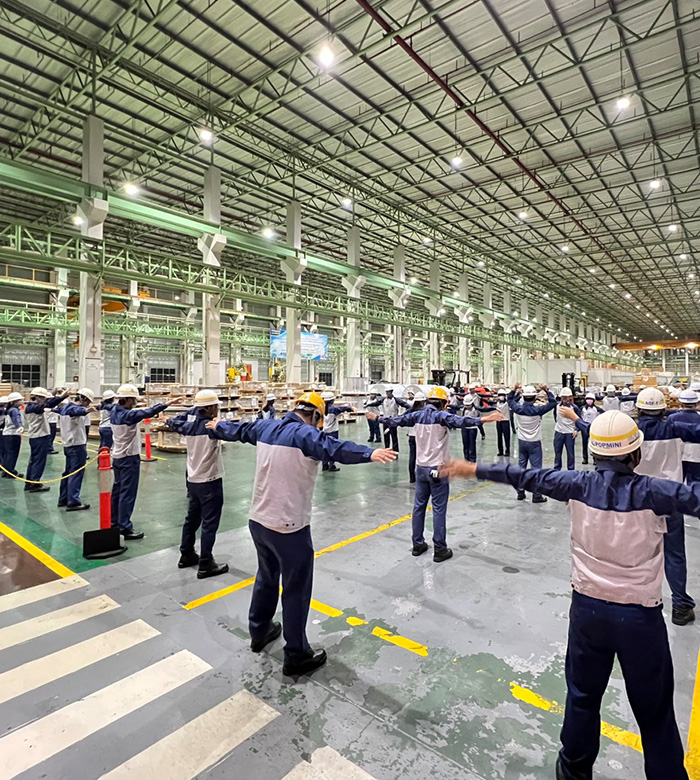
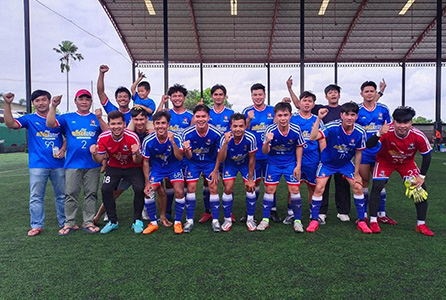
For “Happy Body,” we promote employee health through daily radio exercises every morning and sports activities after work.
Watanabe
Wait—radio exercises? The Japanese ones?
Ew
Yes. Every morning, everyone participates in Radio Taiso No.1, the Japanese routine. New employees even practice using a video.
Oi
For “Happy Heart,” we celebrate employees’ birthdays every month.
Gao
I actually joined one of the birthday celebrations before. If I remember correctly, birthday employees receive gifts, right?
Oi
That’s right. They receive novelty items such as a lunchbox, chopsticks, or a tumbler with the UATH logo. And through a lucky draw, they may also win gift vouchers—or, if they’re lucky, gold.
Watanabe
Gold? As in, real gold?
Ew
In Thailand, it’s traditional to give gold for celebrations or special occasions. Actually, my birthday was just recently, and I won a 200-baht gift voucher in the lucky draw.
Gao
Gift vouchers sound wonderful too! I’d love to see birthday celebrations like this in Japan. It’s rare to be celebrated at work, so I think it’s a fantastic initiative.
Are there any initiatives unique to Thailand?
Oi
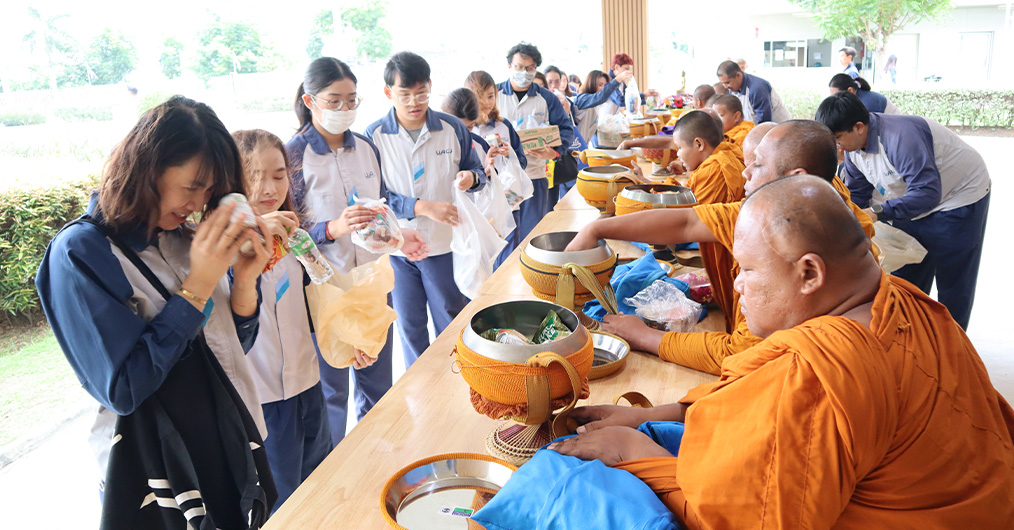
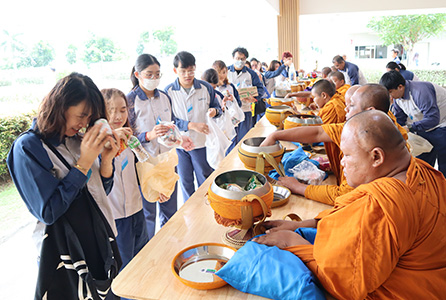
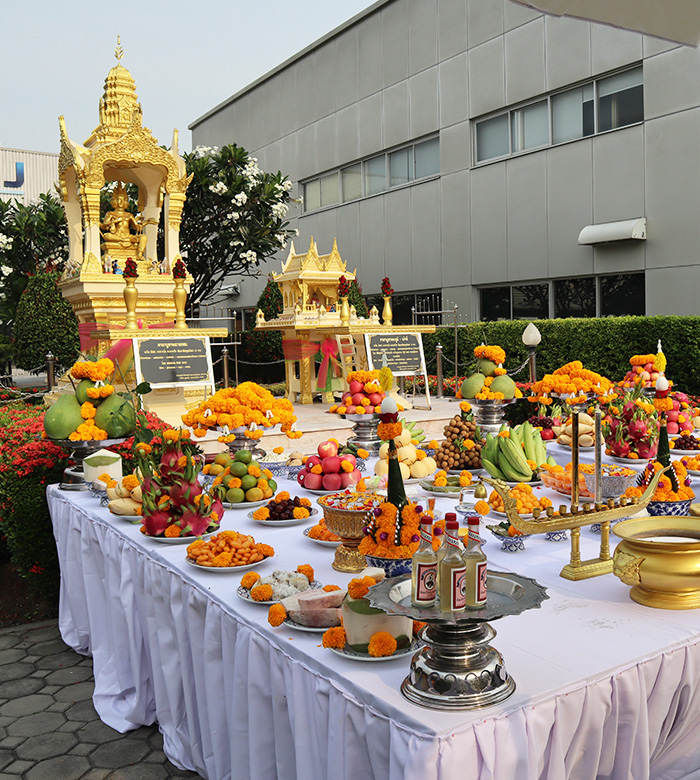
For “Happy Soul,” employees who wish to do so visit the spirit house*1 every Thursday, and we also hold a fish-releasing event based on Buddhist teachings, where doing good deeds is believed to bring merit.
*1 : A spirit house, also called San Phra Phum, is a small shrine built to honor the guardian spirits of the land.
Watanabe
Incorporating religious activities into company initiatives is quite different from what we’re used to in Japan.
Oi
We also have many other events, such as the New Year Party and company trips under “Happy Relax.”
Gao
The New Year Party is one of UATH’s biggest events. I’ve heard everyone practices their performances very seriously.
Oi
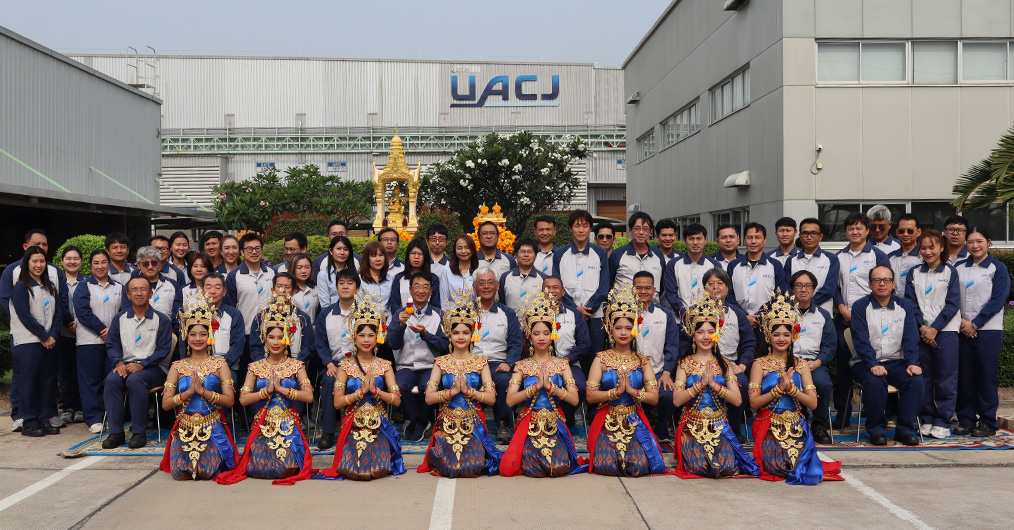
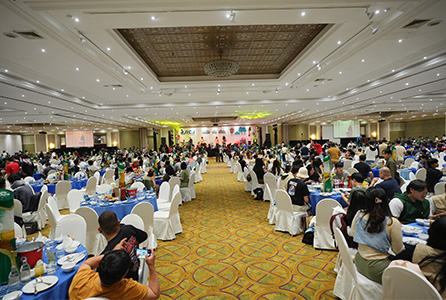
Yes, it’s a major annual event attended by all 1,300 employees. There are employee performances, professional dancers, and everyone dresses up according to the yearly theme.
Watanabe
What kind of themes have you had?
Oi
Last year’s theme was “Camp.” We even hold a costume contest.
Watanabe
That sounds so fun!
Ew
If you have the chance, please join us someday!
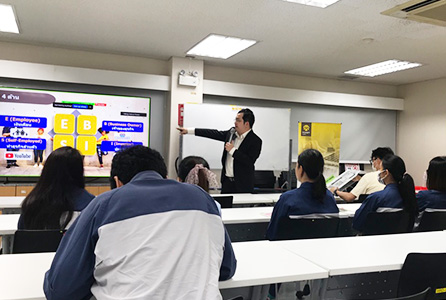
What kind of initiatives support career development and learning?
Ew
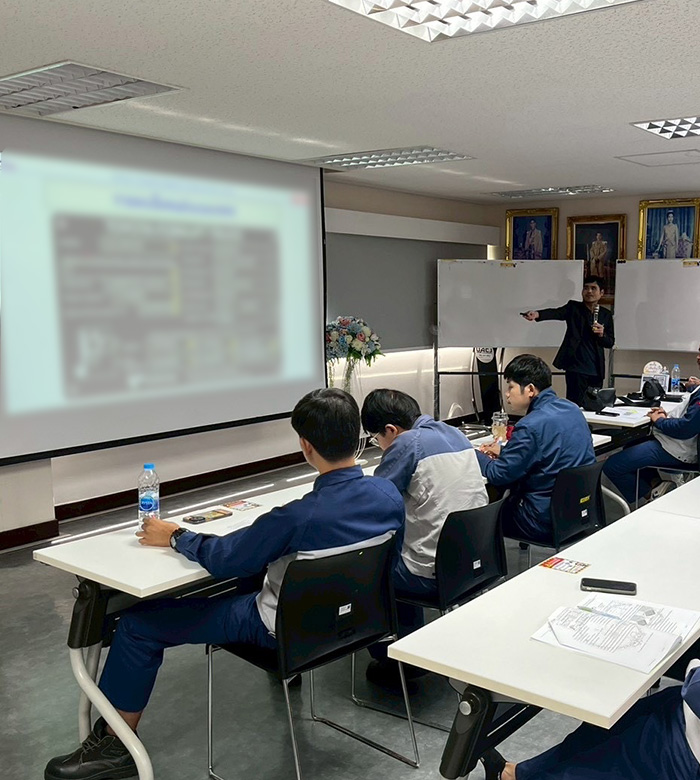
Yes, we have several. Under “Happy Money,” we introduced a provident fund*2 to help employees build stable assets for their retirement. We also invite external instructors to hold financial seminars.
*2 : In Thailand, a provident fund is an optional retirement savings scheme jointly established by companies and employees.
Gao
It’s reassuring to know that the company provides support even for life after retirement.
Oi
In fact, UATH employees are highly motivated to participate in e-learning, and the training programs are very comprehensive. For new employees alone, there are about 50 basic training videos, and we also offer original animated training content. Anyone can freely access and learn from these resources.
Watanabe
Fifty training videos just for new employees—amazing! It really shows how motivated everyone in Thailand is to learn.
Oi
In Thailand, it’s common to advance one’s career through job changes. Because of that, employees are highly motivated to acquire skills or knowledge that can lead to promotions or salary increases.
Gao
Improving not only the working environment but also employee motivation and skills is essential for a company’s sustainable growth.
Oi
We also manage the training process thoroughly. The system tracks who is studying what, how far they’ve progressed, and what score they achieved to pass.
Gao
That’s impressive. A learning system that encourages self-driven growth, rather than passive training, is something we would love to learn from.

Which programs are especially popular among employees?
Ew
The radio exercises are actually very popular.
Gao
Moving your body is really important! I recently started going to a fitness gym through UACJ’s welfare program, and even my stiff shoulders got better (laughs). It really reminds me that good health is essential for work. “Happy Body” truly matters.
Ew
That’s great to hear. Radio exercises are surprisingly refreshing!
Oi
Another popular activity is our two-day, one-night company trip for all employees. In recent years, we’ve organized it by department, but when we had fewer than 1,000 employees, everyone used to go together. We had 14 or 15 large buses traveling in a row, escorted by police at the front—so it was a pretty big event (laughs).
Watanabe
That must have been quite a sight (laughs). Company trips have become much less common in Japan nowadays. Have you seen any visible effects from the Happy Workplace Program?
Ew
I believe it has contributed significantly to reducing the turnover rate. If we look at the trend since 2014, the turnover rate has decreased year by year, and as of 2024 it stands at 6.98%. The national average turnover rate in Thailand is said to be around 20%.
Gao
That’s noticeably lower than the average. It’s clear that these initiatives are truly supporting employees’ sense of purpose and satisfaction at work.

What does it mean to “work happily”?
Ew
In Thailand, there is a word called “sabai,” meaning a calm and fulfilled state, and I believe this value forms the foundation of how we approach work.
Gao
I’ve heard that word before. So it’s about being emotionally fulfilled and able to work in a happy state of mind.
Ew
Yes. It is said that people are able to live positively with purpose when they coexist with others—feeling a sense of responsibility and belonging within their family, organization, and community. We believe that this state of being is what it means to “work happily.”
Oi
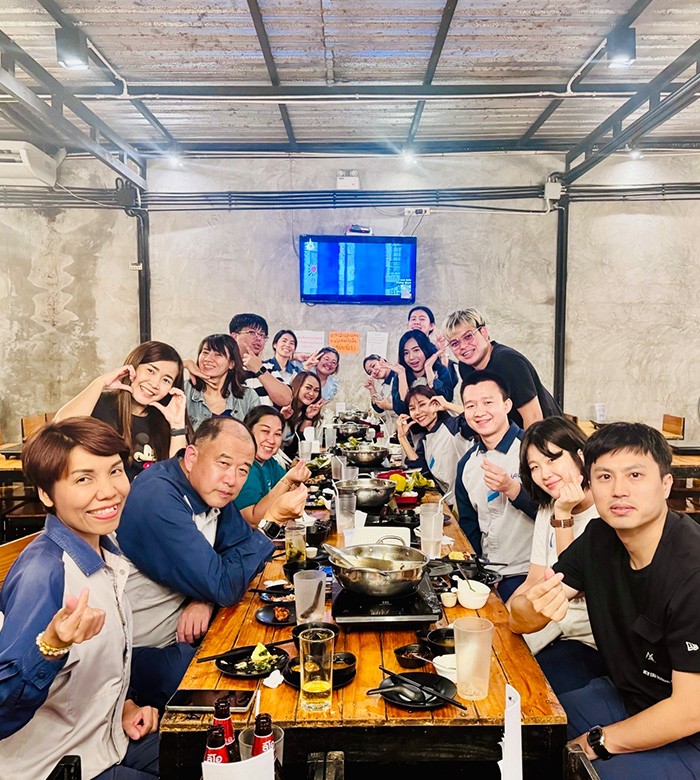
That is exactly why we have “Happy8” and the “Happy Workplace Program.” There are many different kinds of people in the workplace, and not everyone thinks the same way. Our role is to help everyone understand one another, reduce stress, and create an atmosphere where people can speak openly and honestly.
Watanabe
I can clearly see how your HR team works together to help employees work happily.
Gao
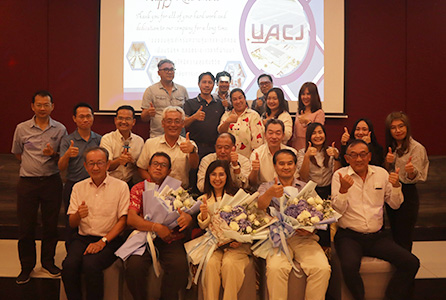
No wonder UATH has been able to significantly reduce its turnover rate over the past decade. It’s also inspiring to learn how working happily connects to a sense of life fulfillment—sabai jai.
Ew
Thank you. By the way, I would love to hear about UACJ’s initiatives as well.
Watanabe
Like UATH, we also conduct health checkups and blood donation drives. As part of our CSR activities, we clean up the areas around our facilities and beaches, and at the Fukui Works we are involved in forest reforestation activities in the Fukui region.
Gao
We also engage in educational activities. I once joined an environmental class with children, where we learned about aluminum recycling and environmental issues.
Oi
That sounds fascinating! I’d love to hear more about it if we get the chance.
Watanabe
Yes, let’s definitely exchange ideas. And on a personal note—I put effort into organizing social gatherings (laughs). We regularly hold them using our recreation budget to strengthen relationships among team members.
Ew
That’s wonderful!
Watanabe
Having opportunities to connect helps work go smoothly. But more than anything, I simply enjoy spending time with everyone—it might be part of my own way of “working happily.”
Could you tell us about your future plans?
Oi
As our next challenge, we would like to work on developing a digital system to support mental well-being.
Gao
Using digital tools?
Oi
Yes. It’s still just an idea at this stage, but we hope to introduce a system—using a mobile app—that allows employees to check their mood and stress levels.
Watanabe
If it actually comes into use, it would help you notice signs of stress or changes in employees much earlier.
Oi
Exactly. I believe that making use of these kinds of data will help us build an even better corporate culture at UATH in the long term.
Watanabe
Talking with you today made me realize once again that, even though we work in different countries, the desire for employees to “work energetically and happily” is the same everywhere. I hope we can continue improving our workplaces together.
Gao
Thank you so much for today.
Oi
Ew
Thank you very much.
UACJ (Thailand) Co., Ltd.
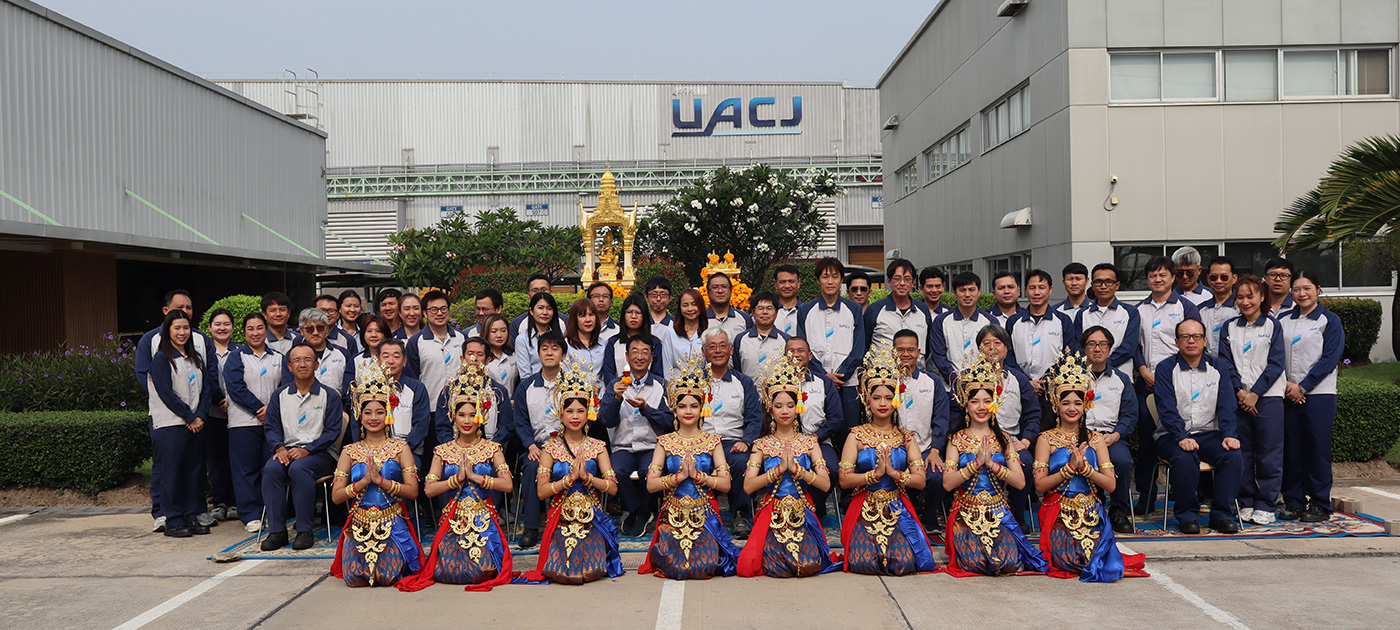
UACJ Group’s production base in Southeast Asia. The Rayong Works is the largest flat-rolled aluminum production plant in Southeast Asia, operating an integrated manufacturing process from melting onward and maintaining an annual supply capacity of 320,000 tons.
https://uath.uacj-group.com
https://uath.uacj-group.com
AFTER INTERVIEW
UACJ – Atsushi Watanabe
Seeing the initiatives being carried out in Thailand—a region with customs and culture quite different from Japan—felt incredibly refreshing. What impressed me most was how everyone at UATH genuinely enjoys engaging in these activities. Now that the UACJ Group has issued its People Statement, I feel inspired to reconsider what we can do to further enhance the well-being of our organization.
Profile
I try to live each day with a sense of joy. Whenever I manage to walk through the busy Otemachi Station without bumping into anyone, I feel a small moment of happiness!
UACJ – Gao Lei
Through this interview, I gained a much deeper understanding of Thai culture and values—especially the importance of “sabai jai,” the state of feeling calm and fulfilled. Although Japan and Thailand may differ in how we work, I felt that the desire for happiness at the core is shared by both cultures. This conversation provided a meaningful opportunity to reflect on what a “happy workplace” looks like in both countries, and it encouraged me to think once again about the universal question: What is essential happiness for human beings, beyond borders?
Profile
I’m not great at sports, but I try to maintain my health little by little through yoga and Chocozap. I was born in China, but I love both Japan and Thailand! I once challenged myself to master Thai—but it was so difficult that I gave up (laughs). Still, I hope to try again someday!
* The information in this article was current at the time of the interview.