
TRY
Sustainability Discovery Team on the Road
#01 Nagoya Works Part 1
— The key to sustainability lies on the shop floor!? A closer look reveals a treasure trove of circulation.
#01 Nagoya Works Part 1
— The key to sustainability lies on the shop floor!? A closer look reveals a treasure trove of circulation.
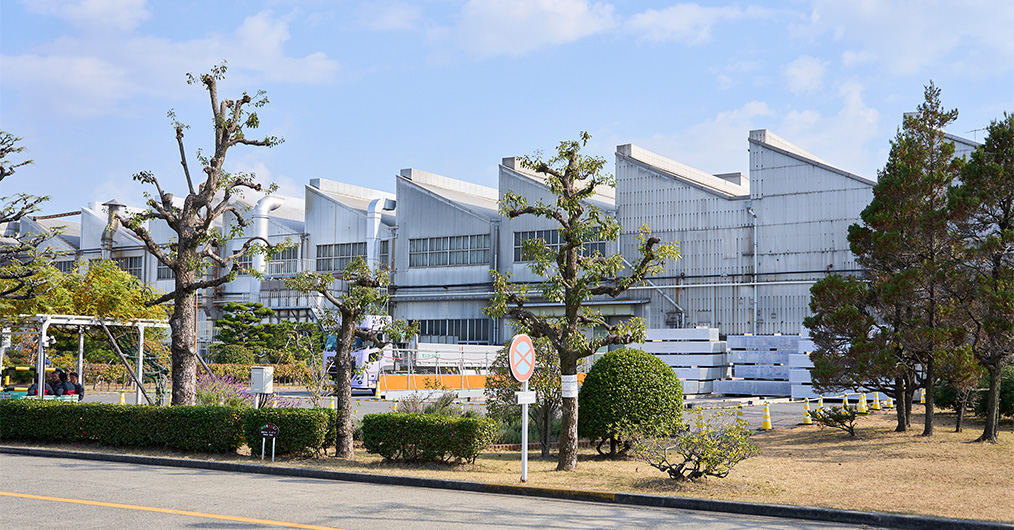
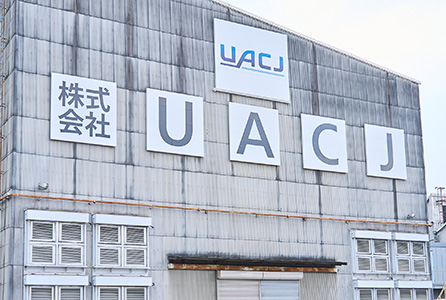
A new series kicks off in which UACJ employees travel to UACJ Group manufacturing sites as the “Sustainability Discovery Team,” exploring initiatives for sustainability. The first stop is the Nagoya Works. In operation since 1941, the site boasts a long history while also housing a state-of-the-art R&D Center for advanced technology development—bringing together aluminum’s past, present, and future in one place. What kinds of sustainability actions are taking place here? We’ll share the story in two parts.
UACJ Nagoya Works
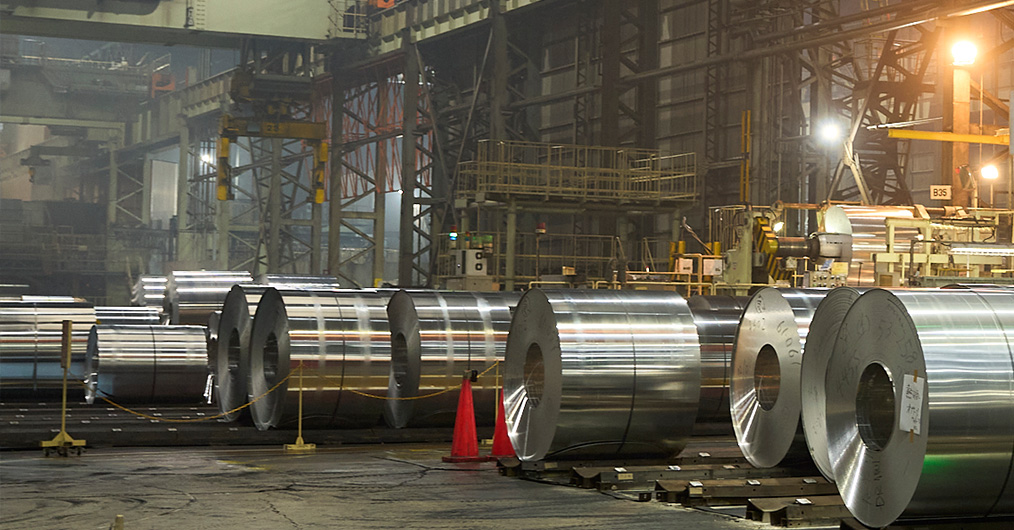
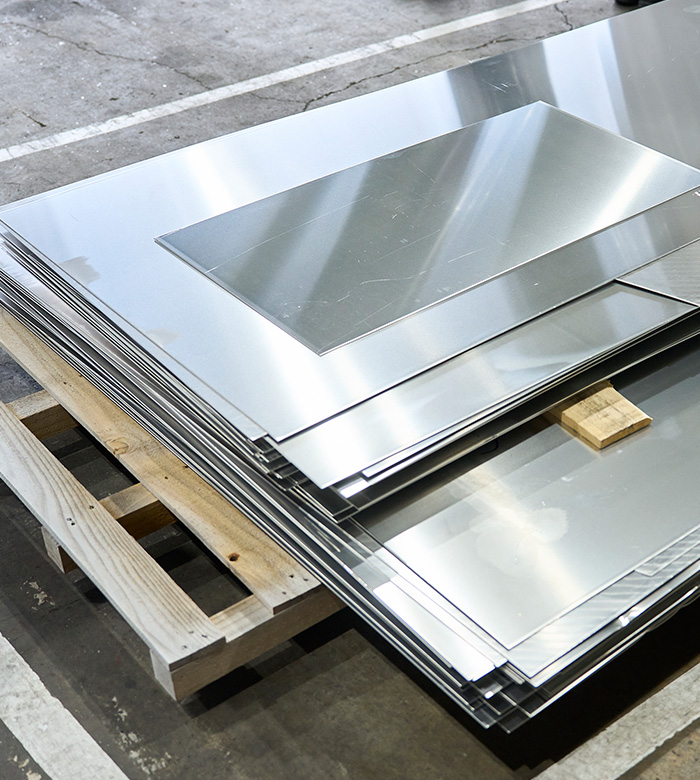
The Nagoya Works is one of Japan’s largest manufacturing bases, producing more than 300,000 tons of aluminum flat-rolled products annually. As one of UACJ’s flagship plant, it carries out integrated aluminum sheet production—from casting through hot and cold rolling, surface and heat treatment, leveling, cutting, sliting, and other finishing processes.
https://www.uacj.co.jp/english/company/network/domestics/nagoya.html
https://www.uacj.co.jp/english/company/network/domestics/nagoya.html

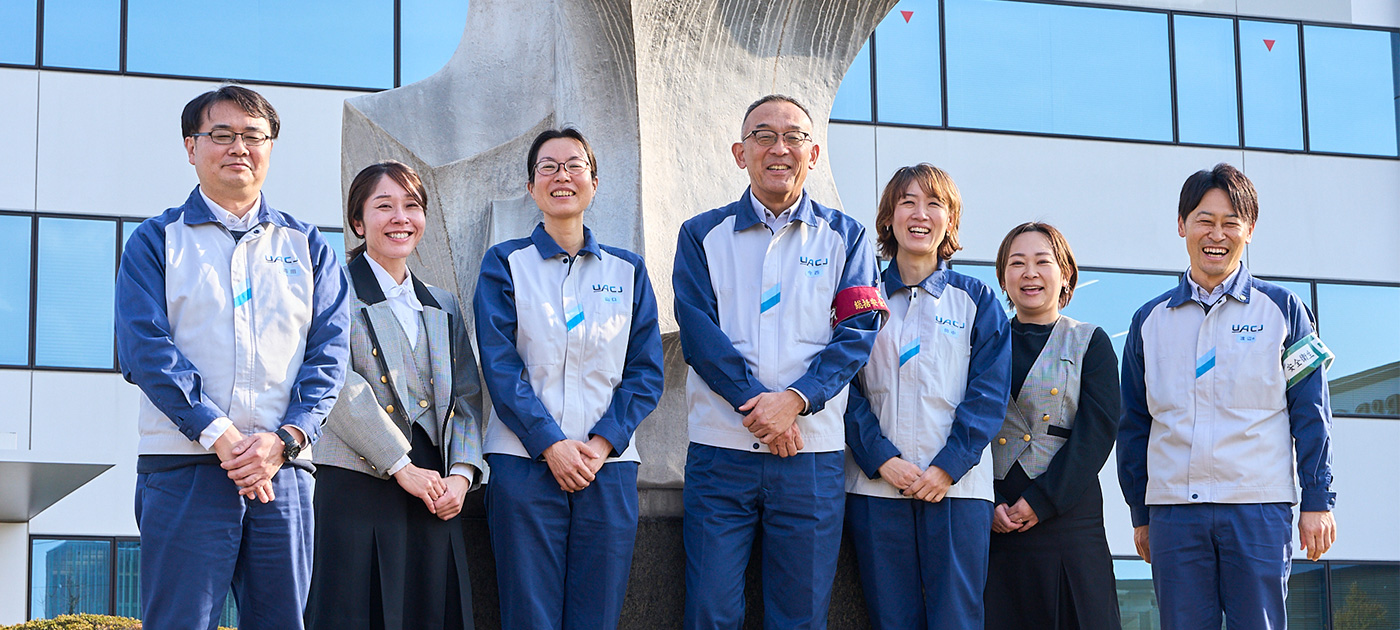
Members of the Sustainability Discovery Team. From left: Hakoda, Ochiai, Yamaguchi, Imanishi, Senior General Manager, Nagoya Works, Tanaka, Kato, and Watanabe.
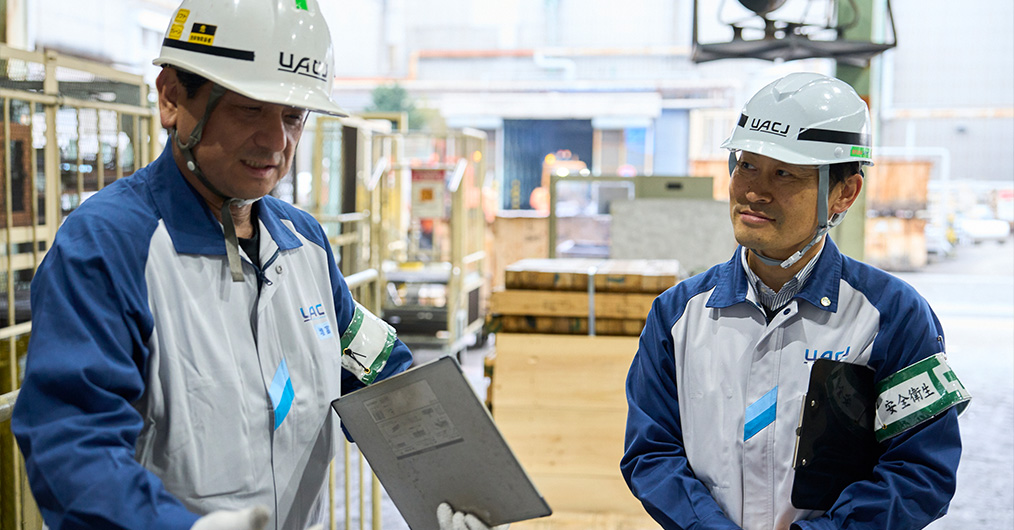
Joining us on this tour of the Nagoya Works are the members of the Sustainability Discovery Team. Although they work at the Nagoya Works, some of them admit, “To be honest, we may not know that much about what other departments do!?” What kinds of discoveries await them? The lead interviewer is Watanabe from the Environment Section, Safety & Environment Department, Nagoya Works. Let’s start our tour.
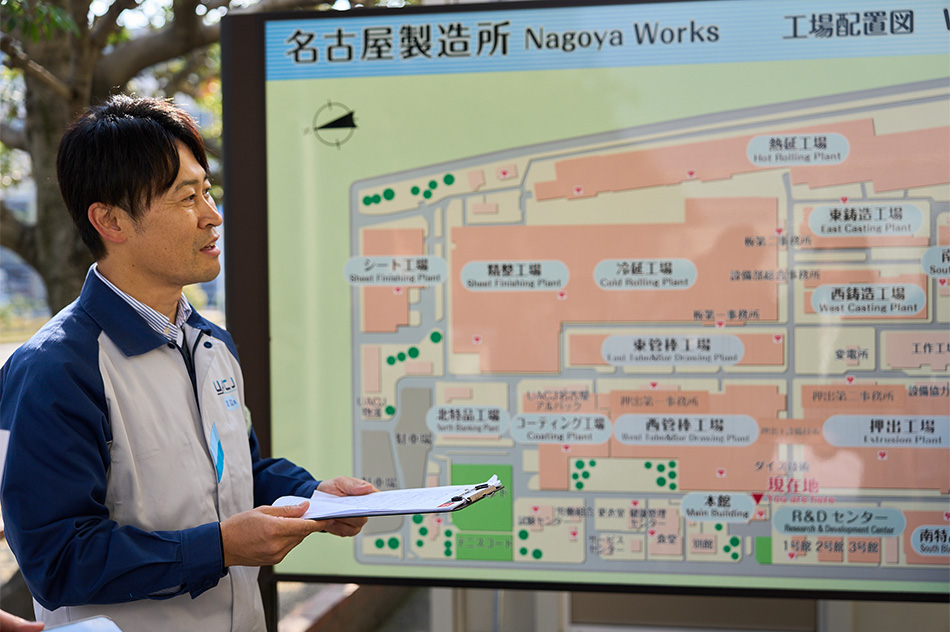
The first stop is the North Gate, one of the main entrances to the Works. Here, an environmental initiative has apparently been continuing for nearly 40 years. We spoke directly with Suzuki & Kobayashi, who is in charge.
 North Gate
Featuring
Sansen -
Yuuki Suzuki
Yuuki Suzuki
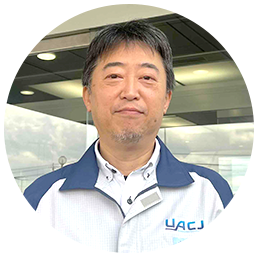
Featuring
UACJ -
Hiroki Kobayashi
Hiroki Kobayashi
Nearly 40 Years and Counting! What Environmental Activity Connects with the Local Community?

Suzuki
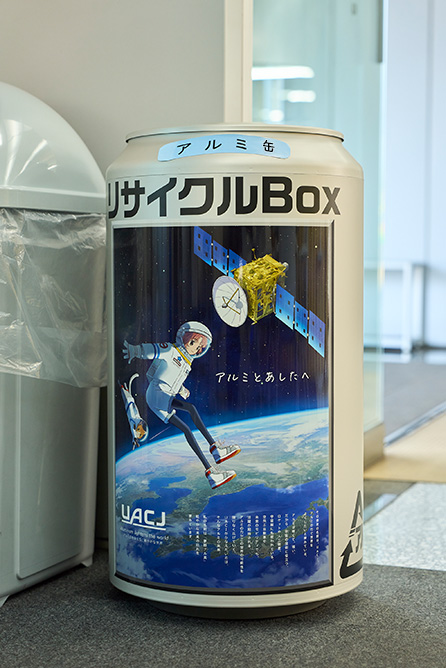
Here, we collect aluminum cans. Employees of the Works and local residents bring in empty aluminum cans, and we purchase them at a rate of one yen per can.

Watanabe
That is one of the longest-running initiatives at the Nagoya Works.
Suzuki
Yes. It started in 1989 and has been continuing for nearly 40 years. Inside this container are the aluminum cans we’ve collected.
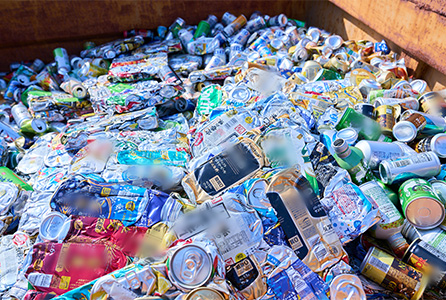
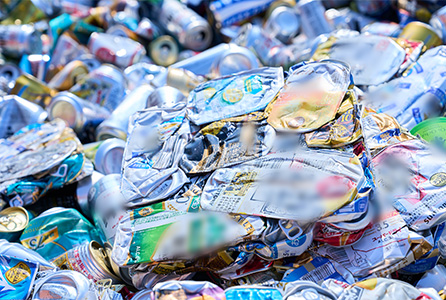
Watanabe
Wow! There are quite a lot in there. About how many do you collect?
Suzuki
We collect around 10,000 cans per month.
Watanabe
That many? That’s impressive.
Suzuki
But in the past, we used to collect far more. At its peak, we reportedly collected as many as 1.8 million cans.
Watanabe
1.8 million cans! That’s a huge difference compared with current levels.
Suzuki
The volume has decreased, but for a positive reason. Since we began this activity, recycling has become more widespread, and collection efforts by local communities and schools have expanded. As a result, the amount collected at the Works has declined.
Watanabe
That’s true—now you see collection boxes everywhere, at supermarkets, convenience stores, and around town.
Suzuki
This activity originally started to promote awareness of recycling. At the time, the concept of recycling was not yet widespread, and it was not uncommon to see recyclable waste such as aluminum cans and PET bottles discarded along roadsides.
Watanabe
I see.
Suzuki
That’s when UACJ decided to launch an environmental initiative involving the local community, asking what it could do as a company that works with aluminum. That initiative is this aluminum can collection program.
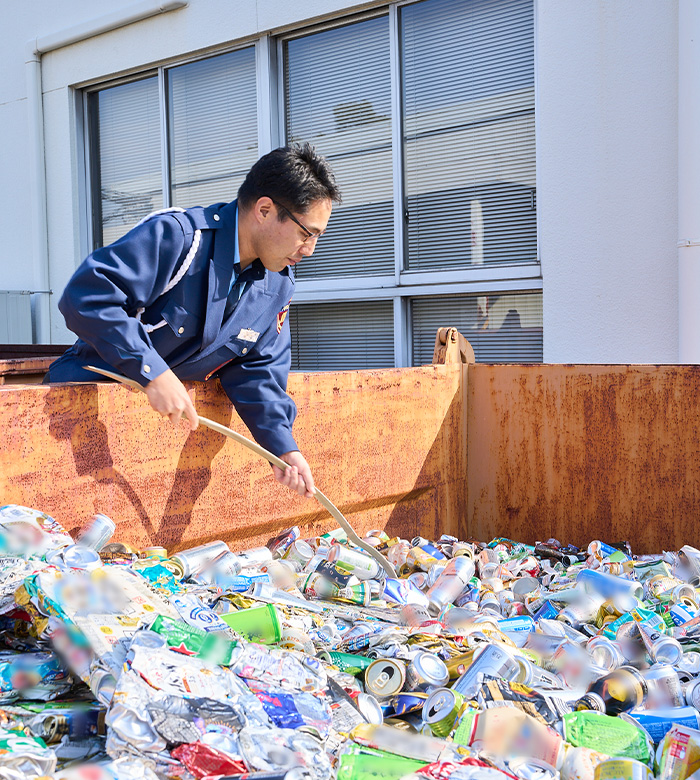
How Did You Expand the Local Recycling Network?

Kobayashi
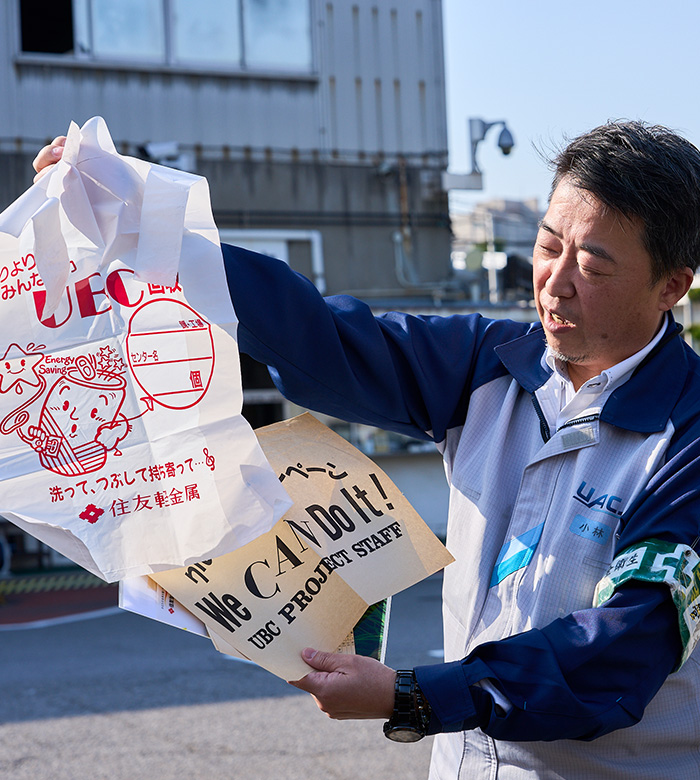
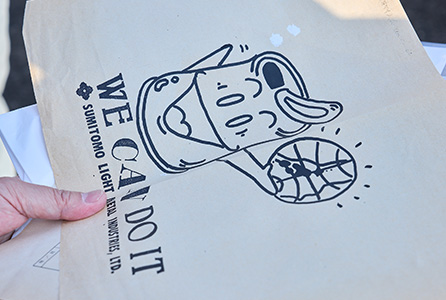
When we first started this activity, we put a lot of thought into how to promote it—making handmade posters and running campaigns both inside and outside the company.
Watanabe
It sounds like a steady, grassroots effort.
Kobayashi
Above all, we have worked to spread this initiative throughout the community with the mission of not turning resources into waste, but properly collecting them. As a result of these efforts, we now receive a great deal of cooperation from local residents.
Watanabe
That really is an initiative unique to a manufacturing site that is deeply rooted in the local community. By the way, where do the aluminum cans collected here end up?
Kobayashi
After being handed over to scrap recyclers, they are reborn as aluminum and put to use again domestically.
Watanabe
That’s true circulation. Since these are valuable resources that have been carefully collected, preventing them from flowing overseas is also an important challenge going forward. Ideally, high-quality aluminum should continue to circulate within Japan.
Kobayashi
Yes. The significance of this activity has shifted from “not discarding and collecting” at the time it began to “how to circulate resources.” In any case, I believe it is a meaningful activity that should be continued far into the future.
Watanabe
That’s wonderful. Thank you very much, Mr. Kobayashi.
 Hot Rolling Plant
Featuring
UACJ -
Seizo Akiyoshi
Seizo Akiyoshi
What Are Your Activities to Avoid “Wasting” Resources?

Akiyoshi
Hello! I’m Akiyoshi, and I’ll be your guide from here. When it comes to “not wasting,” there’s a perfect initiative here. This is it.
Watanabe
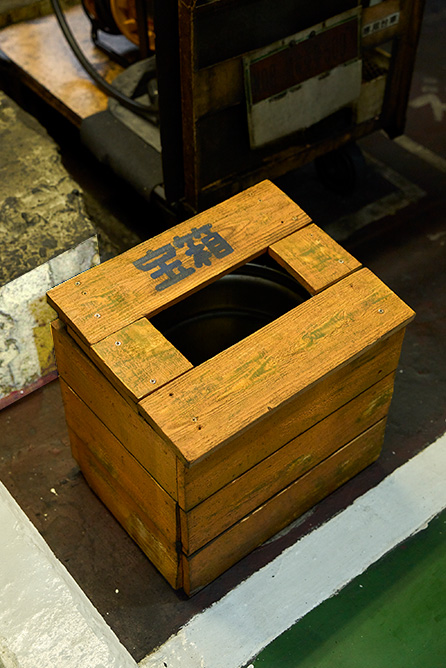
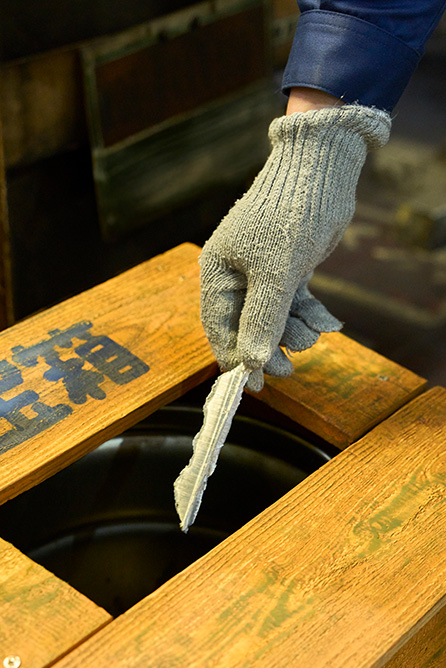
A “Treasure Box”? What is this?
Akiyoshi
It’s a box for collecting aluminum offcuts—our “treasure,” aluminum, which is an important business resource for us.
Watanabe
I see—that’s why it’s called a “Treasure Box”!
Akiyoshi
Originally, we collected aluminum chips and “katsuzai”(*) without installing a wooden box, but since this area is visible to customers, I wanted to improve its appearance and decided to make one myself.
*Katsuzai: At UACJ, we refer to aluminum scrap generated within our works as “katsuzai.” This is a coined term meaning “materials to be actively utilized,” reflecting our belief that such scrap should be treated as a valuable resource.
Watanabe
What—did you make this box yourself, Mr. Akiyoshi?
Akiyoshi
Yes. In fact, I took inspiration from a similar initiative at the UACJ Fukui Works. I saw it in our in-house newsletter before and was really impressed, thinking it was a great initiative.
Watanabe
That’s great. Where do the aluminum chips you collect come from?
Akiyoshi
Sometimes, when katsuzai is being transported, small aluminum chips fall off. They’re tiny amounts, but since we are a company that works with aluminum, we do this because we want to treat even the smallest resources with care.
Watanabe
“Not wasting any resources”—that’s an important principle for UACJ as it aims to build a circular society through aluminum. Where do the collected materials go from here?
Akiyoshi
About once every three months, we take them to the casting shop, where they are reused again.
Watanabe
A system that allows resources to circulate within the Works is great, too.
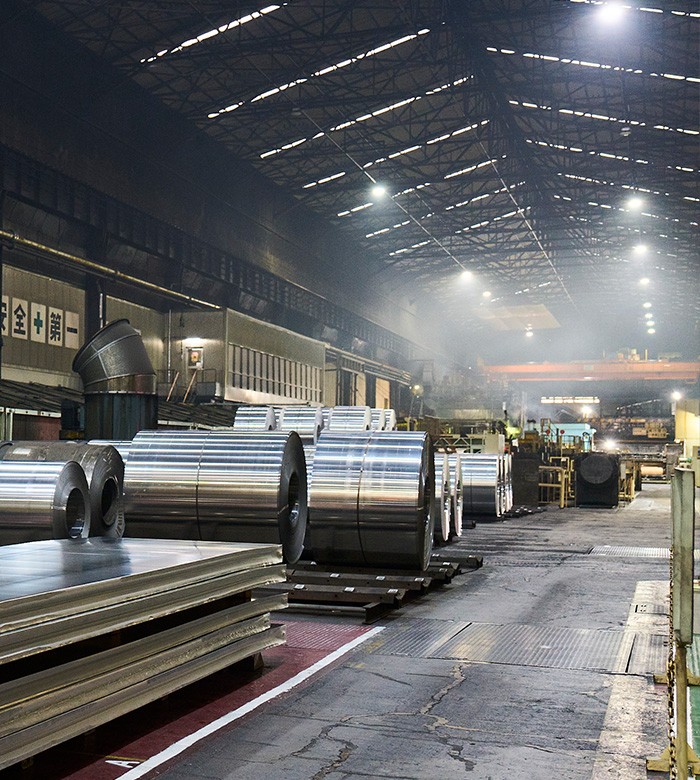
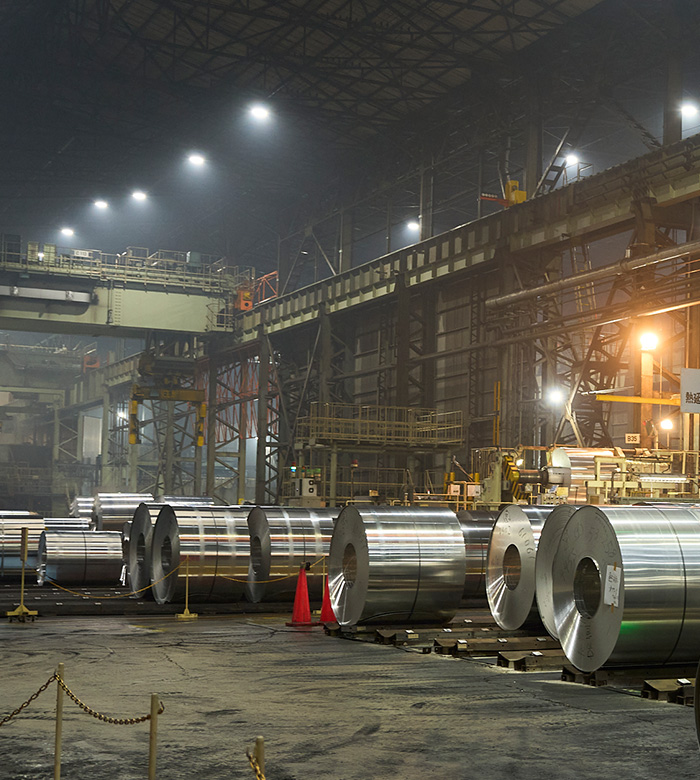
Leaving the hot rolling mill, we moved on to another shop. There may be more hints here for circulation and effective resource use, so we spoke directly with Masutomi, who is in charge.
Leaving the hot rolling mill, we moved on to another shop. There may be more hints here for circulation and effective resource use, so we spoke directly with Masutomi, who is in charge.
 Cold Rolling Plant
 & Indusrial aluminum scrap sorting yards
Featuring
UACJ -
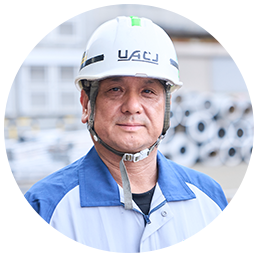
Akihito Masutomi
Akihito Masutomi
How Is Aluminum Used Here in Ways Unique to the Works?

Masutomi
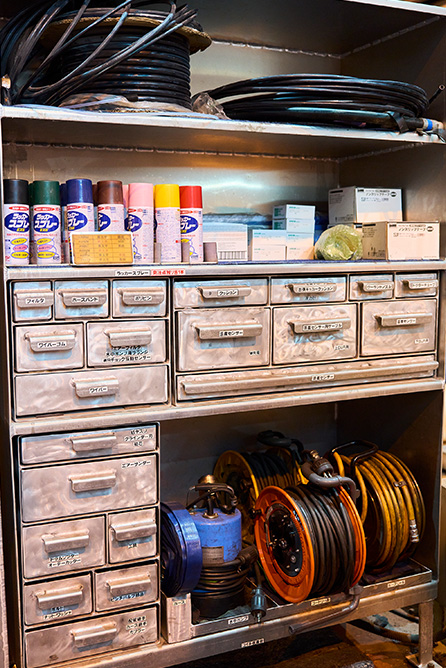
With the spirit of “making what we need ourselves,” this is an aluminum shelf that is actually used on the shop floor.
Watanabe
I’ve seen this before!
Masutomi
We started making these about two years ago as part of our 2S activities*.
*2S activities: Part of the workplace improvement activities commonly used in manufacturing, known as 5S (Sort, Set in order, Shine, Standardize, and Sustain). “2S” refers specifically to the two most important elements: Sort and Set in order.
Watanabe
I see—so these shelves are for organization and order.
Masutomi
Previously, tools used on the shop floor were not kept in one place, and we had to gather them each time they were needed. However, by organizing them using aluminum shelves, it became immediately clear at a glance what was located where, which in turn improved work efficiency.
Watanabe
It’s an original design, isn’t it?
Masutomi
Yes. People on the shop floor draw up the plans themselves, and members of the Kaizen (continuous improvement) team make them at the in-house workshop.
Watanabe
Making your own work tools using aluminum offcuts—this really feels like a culture rooted in the Nagoya Works. By the way, where does this aluminum come from?
Masutomi
Let me show you.
So we arrived at a sorting area lined with aluminum sheets and offcuts. This is where katsuzai left over after processing at four shops—hot rolling, cold rolling, finishing, and sheet—are gathered.
So we arrived at a sorting area lined with aluminum sheets and offcuts. This is where katsuzai left over after processing at four shops—hot rolling, cold rolling, finishing, and sheet—are gathered.
Faster and More Efficient—What Innovations Support Aluminum Circulation?
Masutomi
The aluminum shelves I showed you earlier are also made using the katsuzai collected here. To circulate aluminum efficiently within the Works, we have added a few improvements to the sorting process at this site.
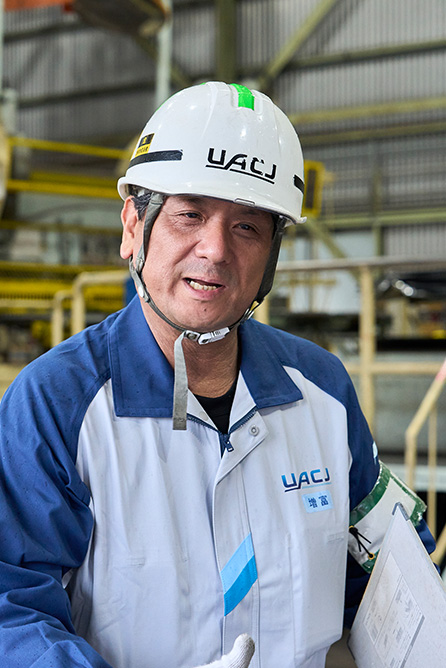
Watanabe
What kind of “improvements” are those?
Masutomi
Simply put, we sort aluminum by alloy type, and place the most frequently used alloys in easily accessible locations.
Watanabe
I see. By sorting by alloy type in advance and keeping track of quantities, you can send what’s needed to the next process more quickly and efficiently.
Masutomi
Exactly. If the circulation of katsuzai runs smoothly, we can reduce the use of virgin aluminum ingots*, which also leads to cost reductions.
*Virgin aluminum ingots: Metal ingots made of pure aluminum or composition-adjusted alloys that serve as raw materials for aluminum products. Because they are produced from bauxite, their environmental impact is higher than that of recycled aluminum.
Watanabe
Making effective use of resources already available within the Works is also one important perspective on recycling and circulation.
Masutomi
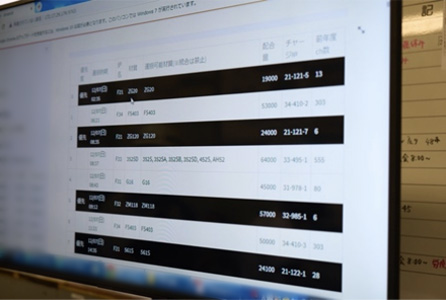
Recently, we have linked internal systems to introduce greater visibility into casting operations. By doing so, we can see which alloy types the casting team will need in the near future, allowing us to prioritize sorting those aluminum materials and proactively respond to demand.
Watanabe
That’s fascinating. I had no idea such a system was in place.
Masutomi
With real-time visibility into casting operations, we can reduce work-in-progress, improve productivity, and at the same time aim for cost reductions.
Watanabe
These may be small, detailed improvements, but it’s clear how they lead to significant results.
From collecting a single aluminum can or a small aluminum fragment to devising ways to use and circulate aluminum resources efficiently within the Works without waste—each individual effort may be small, but the fact that they have been continued patiently, steadily, and with care over many years led us to a new realization: this is the key to sustainability at the Nagoya Works.
From collecting a single aluminum can or a small aluminum fragment to devising ways to use and circulate aluminum resources efficiently within the Works without waste—each individual effort may be small, but the fact that they have been continued patiently, steadily, and with care over many years led us to a new realization: this is the key to sustainability at the Nagoya Works.
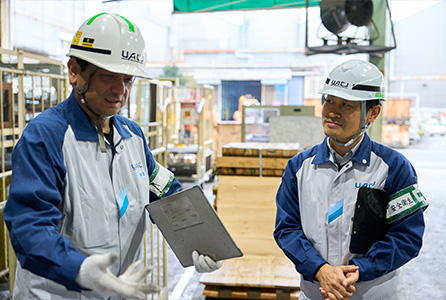
On this visit, we also had the chance to tour the R&D Center. From technologies that draw out the full potential of aluminum to research on new products, it looks like we’ll be able to catch a glimpse of a future shaped by aluminum.
 R&D Center
Featuring
UACJ -
Ippei Hamada
Ippei Hamada
Discovery! A Behind-the-Scenes Story
Can Aluminum Change the Future!? What Is the U-Al Lab.?

Hamada
Hello. I’m Hamada from the R&D Center. This is a place where we conduct technology development that leverages the properties of aluminum.
Watanabe
I don’t usually come into this area myself, so I feel a bit nervous.
Hamada
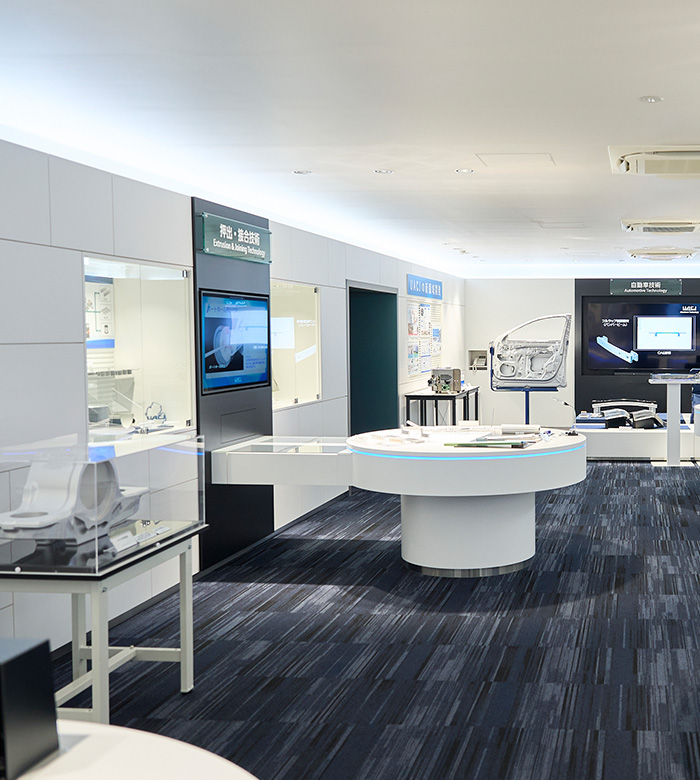
At the R&D Center, around 250 staff members are engaged in research and development. This space, called the U-Al Lab., features exhibits designed to help many people learn about the basic characteristics of aluminum, as well as hands-on displays where visitors can actually touch and experience the technologies we have developed.
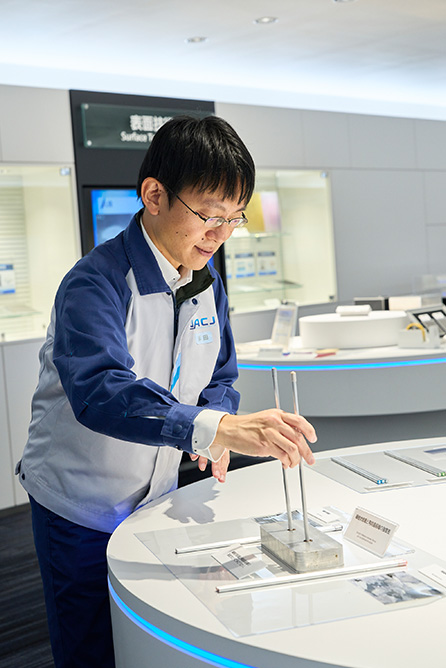
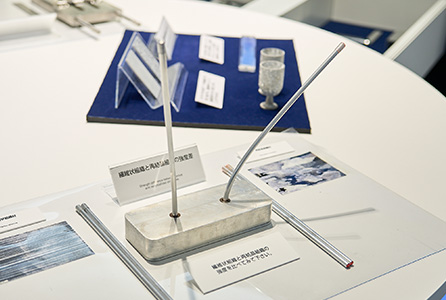
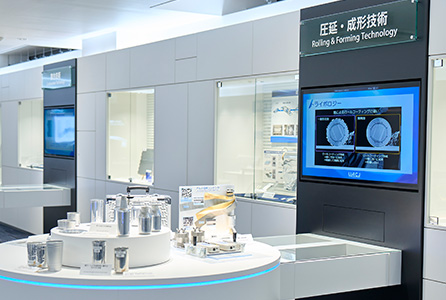
Watanabe
Wow, there’s a lot to see here. What kind of research is carried out at the R&D Center?
Hamada
We are exploring whether new forms of co-creation can be achieved by making the most of aluminum’s properties. In some cases, materials developed here are also used in new fields.
Watanabe
You must be working on quite a large number of research projects.
Hamada
I can’t give you an exact figure for our research, but we’ve secured a vast number of patents over the years. It’s a testament to our commitment to pushing the boundaries of what our materials can do.
Watanabe
That’s impressive. By the way, as we toured the Works today, we came across the keywords “circulation” and “recycling.” Are there related initiatives here as well?
Hamada
Keywords such as “recycling,” “sustainable,” and “eco” have been appearing more frequently in customer requests in recent years. One representative example that is already being put into practical use is our recycled aluminum brand, ALmitas⁺ SMART.
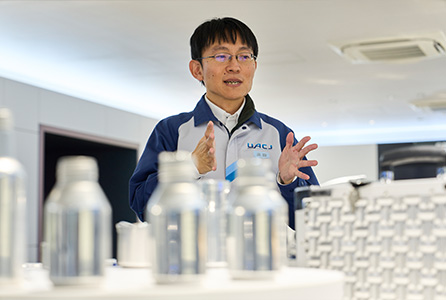
Watanabe
As expected, “circulation” and “recycling” really are essential keywords for the future. I’ll definitely be keeping an eye on them going forward.
In Part 1, we uncovered many discoveries related to “circulation” and “recycling,” but it feels like there is still much more sustainability yet to be discovered. In the second and final installment, Part 2, we will introduce the Nagoya Works’ initiatives in community engagement and Well-being.
To be continued in Part 2 ⇨
In Part 1, we uncovered many discoveries related to “circulation” and “recycling,” but it feels like there is still much more sustainability yet to be discovered. In the second and final installment, Part 2, we will introduce the Nagoya Works’ initiatives in community engagement and Well-being.
To be continued in Part 2 ⇨
Second Article