

TRY
Sustainability Discovery Team on the Road
#01 Nagoya Works Part 2
— A constantly evolving workplace
where Well-being takes shape.
#01 Nagoya Works Part 2
— A constantly evolving workplace
where Well-being takes shape.
This series follows UACJ employees as the “Sustainability Discovery Team,” traveling to manufacturing sites and bases across the country to uncover sustainable actions. Following Part 1, we continue our exploration of the Nagoya Works in this second installment.
First Article
UACJ Nagoya Works
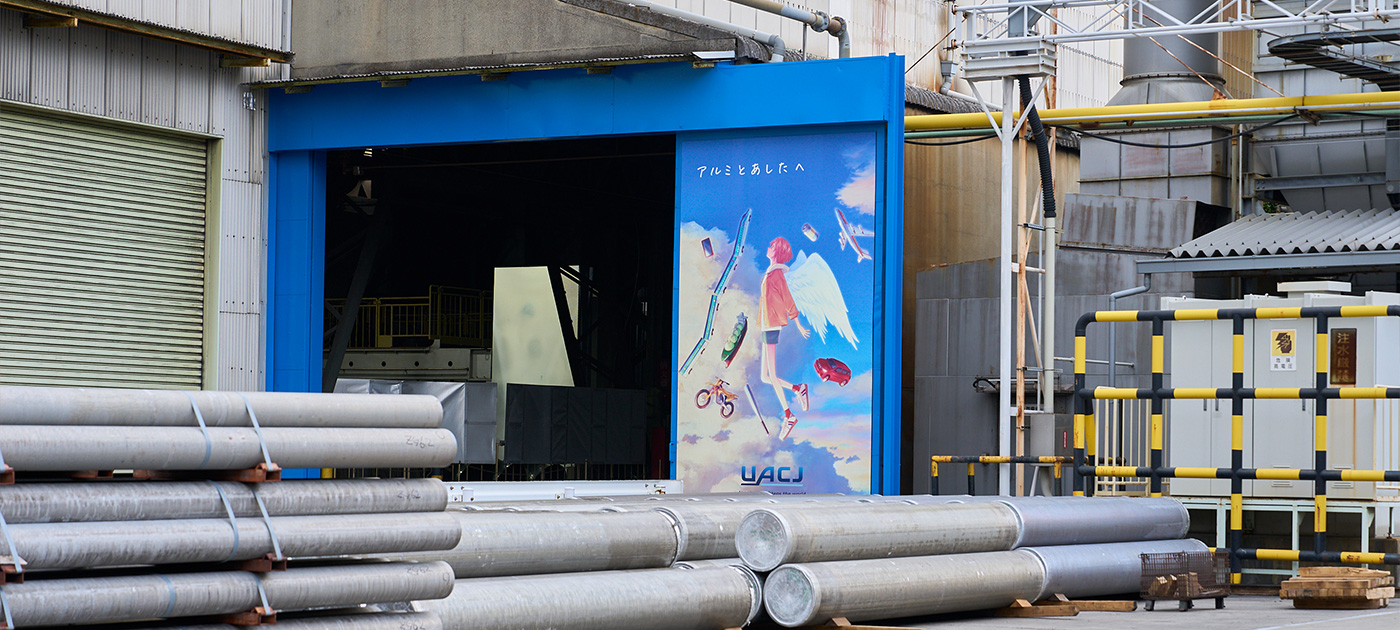
The Nagoya Works is one of Japan’s largest manufacturing bases, producing more than 300,000 tons of aluminum flat-rolled products annually. As one of UACJ’s flagship plant, it carries out integrated aluminum sheet production—from casting through hot and cold rolling, surface and heat treatment, leveling, cutting, sliting, and other finishing processes.
https://www.uacj.co.jp/english/company/network/domestics/nagoya.html
https://www.uacj.co.jp/english/company/network/domestics/nagoya.html

The Nagoya Works has been in operation in Nagoya since before World War II. Over its long history, this site has continued to move forward while engaging with the city, its people, and society—leaving hints connected to sustainability scattered throughout. This time as well, we set off with the Sustainability Discovery Team to search for sustainability within the Works.
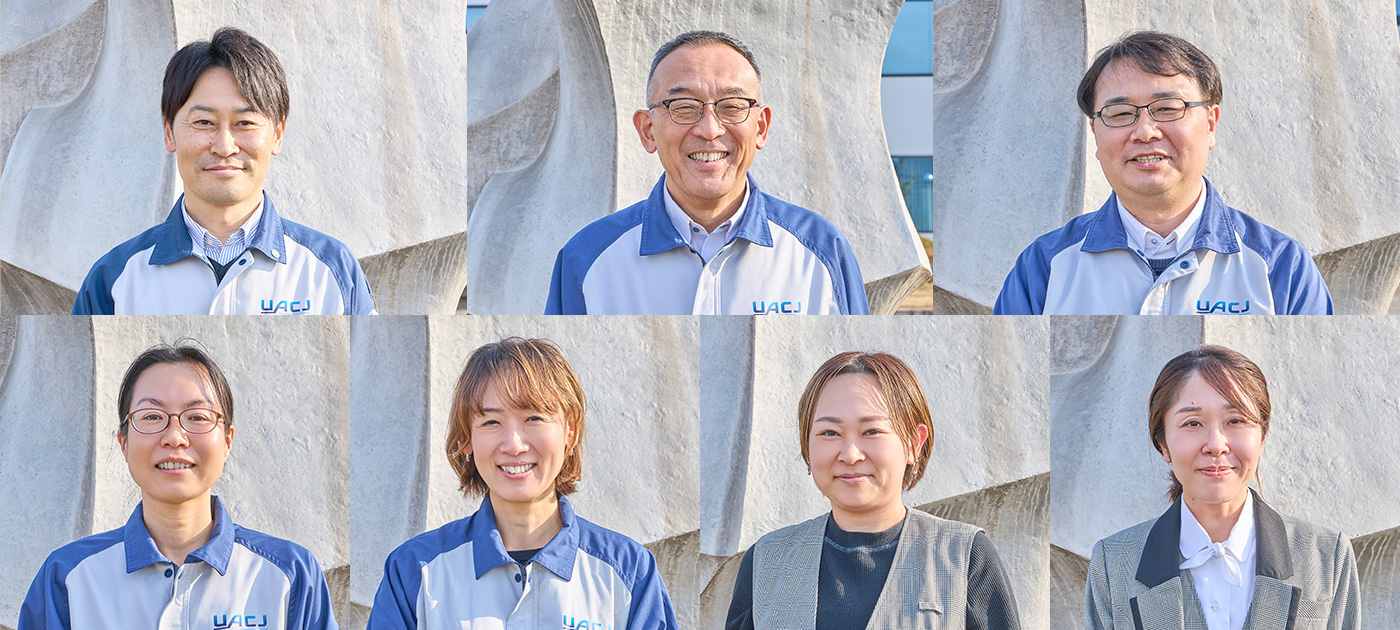
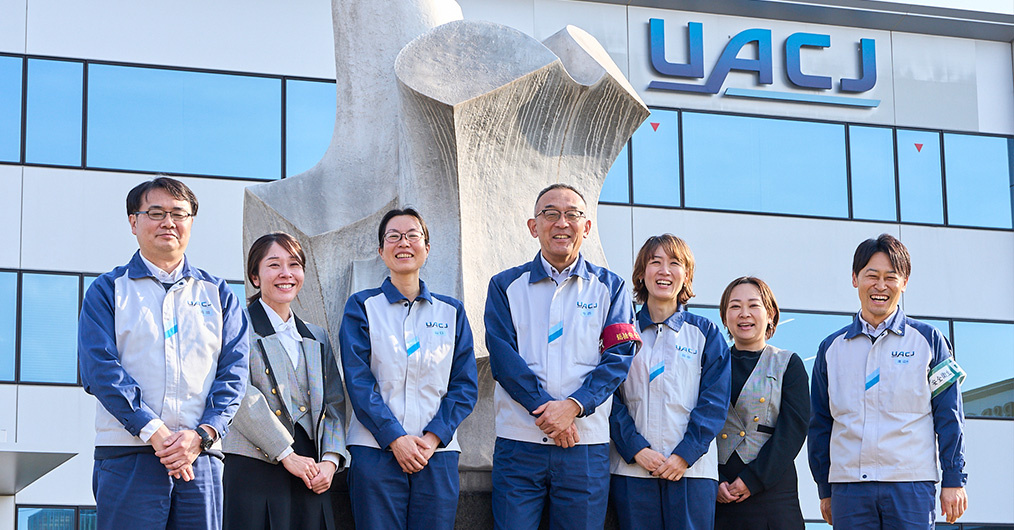
Members of the Sustainability Discovery Team. Top row from left:Watanabe, Imanishi, Hakoda. Bottom row from left:Yamaguchi, Tanaka, Kato, and Ochiai.
First, we spoke with Imanishi, Senior General Manager, Nagoya Works and colleagues who are working together at the Nagoya Works as members of the Sustainability Discovery Team.
What Does Sustainability Mean to the Nagoya Works?

Imanishi
Broadly speaking, I think it comes down to “the environment,” “the local community,” and “people.” The Nagoya Works has a long history—84 years since operations began. There’s no doubt that it has continuously evolved over time.
Watanabe
What kind of changes have there been?
Imanishi
As an urban manufacturing site, we’ve had to constantly rethink the form of the Works and our role within the local community as the city around us has changed. We’ve been thinking about and working on these issues for a long time.

Yamaguchi
The area around the Works has changed quite a lot, hasn’t it?
Imanishi
When I joined the company more than 30 years ago, there were no residential areas around here yet. Across the Horikawa River was Kiba-cho, which prospered as a timber district, and logs used to float in the river behind the Nagoya Works.

Ochiai
It’s hard to imagine logs floating there now.
Imanishi
Today, there are residential neighborhoods, shops, and roads—people’s daily lives are here. Around the year 2000, obtaining ISO 14001 also had an impact, significantly raising environmental awareness within the Works.
Watanabe
Consideration for the surrounding environment—especially measures to address noise and odors—as well as connections with local residents and community events have all increased.
Yamaguchi
The way we employees work has changed as well, hasn’t it?
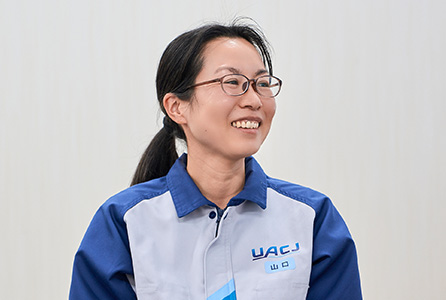
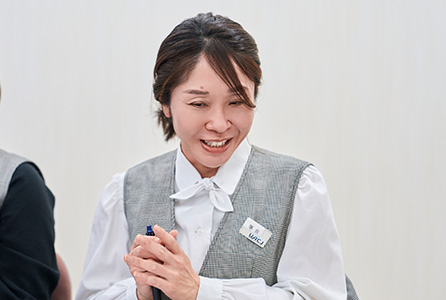
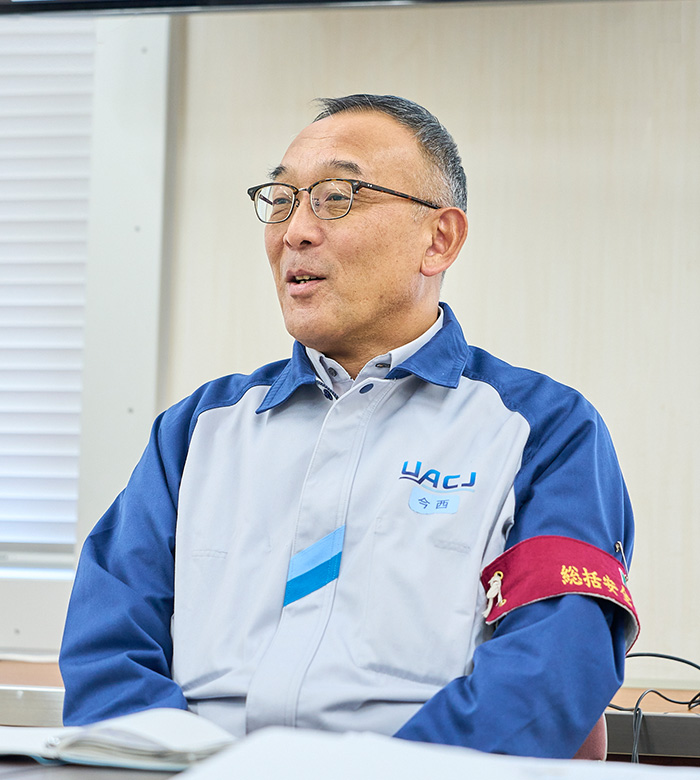
Imanishi
That’s something that should change with the times, too. In fact, I believe that work itself is sustainability.
Ochiai
What do you mean by that?
Imanishi
The business of working with aluminum itself contributes to the environment, and when a manufacturing site continues over a long period of time, many things—such as technology, customs, and good work practices—are passed down. I believe all of that can be called sustainability.
Watanabe
I see—that’s an interesting perspective.
Imanishi
I encourage you to speak directly with the people on the shop floor about each activity in more detail. I’m sure you’ll make some interesting discoveries.
At the Nagoya Works, more than 1,100 employees are at work. Creating an environment where a diverse range of people can work with confidence is built through countless small efforts made each day.
This time, Kobayashi will guide us through the site where those efforts take place.
At the Nagoya Works, more than 1,100 employees are at work. Creating an environment where a diverse range of people can work with confidence is built through countless small efforts made each day.
This time, Kobayashi will guide us through the site where those efforts take place.
 Laundry Facility
Featuring
UACJ
Hiroki Kobayashi
Hiroki Kobayashi
Everyday Ideas for a Better Workplace?

Kobayashi
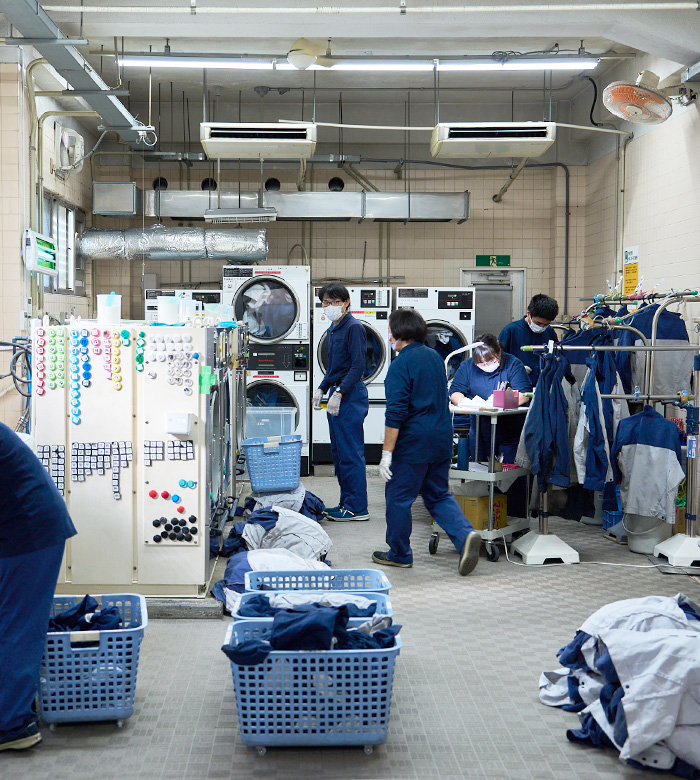
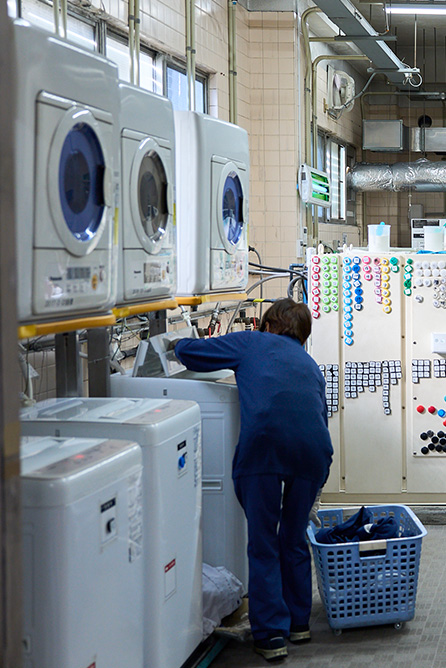
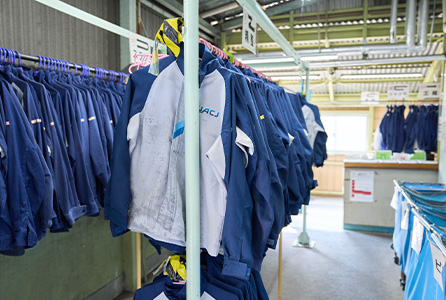
This is the laundry facility. As a daily service for employees, we provide uniform cleaning services, mainly for those working on the shop floor.
Watanabe
When did the cleaning service start?
Kobayashi
It started in 2003. Originally, employees washed their uniforms at home or in company dormitories, but oil stains would stick to washing machines and end up soiling other laundry. As a result, each department began purchasing washing machines to do the laundry on site.
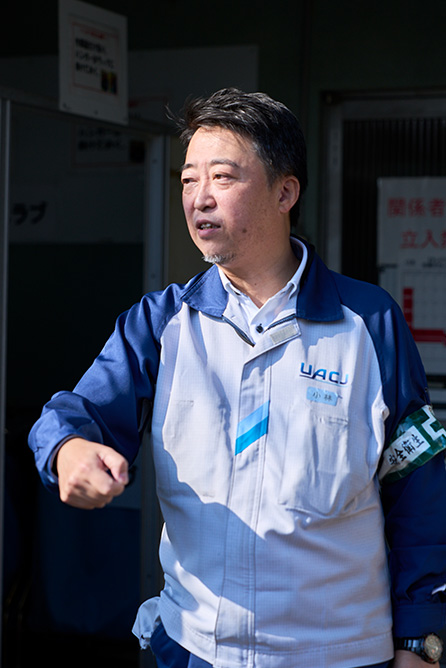
Watanabe
And that led to another issue—organic matter being discharged into rivers through wastewater, right?
Kobayashi
Exactly. Because of this, we consolidated the Works’ washing machines at the current location—the former women’s bath facility—which is connected to the sewer system, and that’s how the cleaning service began.
Watanabe
I imagine this service is greatly appreciated by employees. It truly contributes to their Well-being.
Kobayashi
I’m glad to hear that. We want colleague to feel as comfortable as possible while they work.
Watanabe
About how much laundry do you handle in a day?
Kobayashi
About 700 items in total, including both tops and bottoms. During the peak summer season, it can reach nearly 1,000 items.
Watanabe
That’s a lot! The people working here must have a tough job.
Kobayashi
The people handling the work here are from UACJ Green Net Nagoya, a UACJ Group subsidiary that promotes employment for people with disabilities.
Watanabe
So through this cleaning service, you’re also contributing to employment for a wide range of people. Employee Well-being and effective use of human resources—this really feels like a sustainability discovery.
Kobayashi
From a Well-being perspective, we also put a great deal of thought into the factory cafeteria. Shall we take a look?
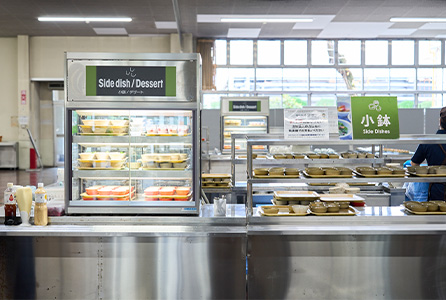
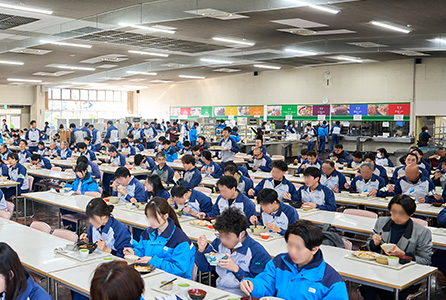
Guided inside, we arrived at the factory cafeteria, which boasts seating for more than 300 people. At lunchtime, it is bustling with employees.? How does Well-being take shape here?
Guided inside, we arrived at the factory cafeteria, which boasts seating for more than 300 people. At lunchtime, it is bustling with employees.? How does Well-being take shape here?
CafeteriaFeaturing
UACJ
Hiroki Kobayashi
Hiroki Kobayashi
Well-Being Through Food—What Does That Look Like?
Kobayashi
Because the Works operates both day and night shifts, meals are provided three times a day—at lunchtime, in the evening, and at night. In total, just under 1,300 meals are served each day.
Watanabe
I use it myself—the menu is really extensive, isn’t it?
Kobayashi
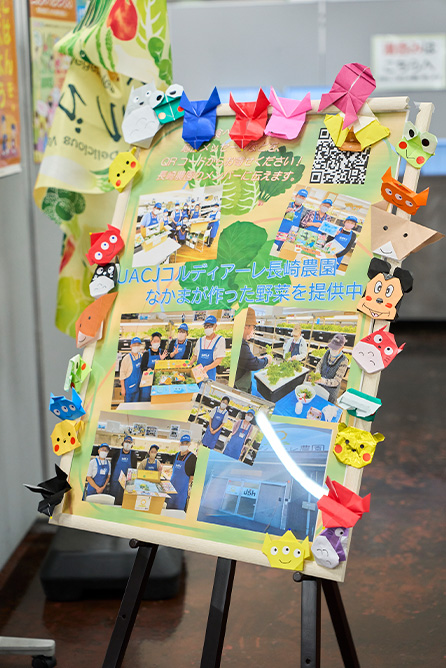
We always offer eight different menu options that change daily. There are seasonal dishes, health-conscious menu items, and every Wednesday we also have a salad bar. Recently, twice a month, the salad bar has featured hydroponic vegetables grown by colleagues with disabilities working at the UACJ Nagasaki Farm, and they’ve been very well received.
Watanabe
It’s also nice to have Nagoya-style local dishes and flavors—and the red miso soup is a great touch, too.
Kobayashi
For special menus, we’ve served eel dishes, and although we haven’t been able to do it much recently, we’ve also organized chanko hot pot events with sumo wrestlers. We’ve tried a variety of ideas.
Watanabe
Really? I didn’t know that.
Kobayashi
After all, we believe that meals should be one of the pleasures of working at a company. Rather than being just a source of energy, we value making lunch and dinner something enjoyable.
Watanabe
Meals are part of everyday life and a source of energy for work, so they’re truly important.
After enjoying a delicious lunch, it was time to head to our next stop. Hearing about a renovation project led by employees themselves, we made our way to the First Flat Rolled Products Office. We spoke with Tanaka and Kato, members of the Sustainability Discovery Team who were in charge of the project.
 Office
Featuring
UACJ
Risako Tanaka
Risako Tanaka

Featuring
UACJ
Kazuki Kato
Kazuki Kato
Led by Employees Themselves! Can You Tell Us About the Office Renovation?

Kato
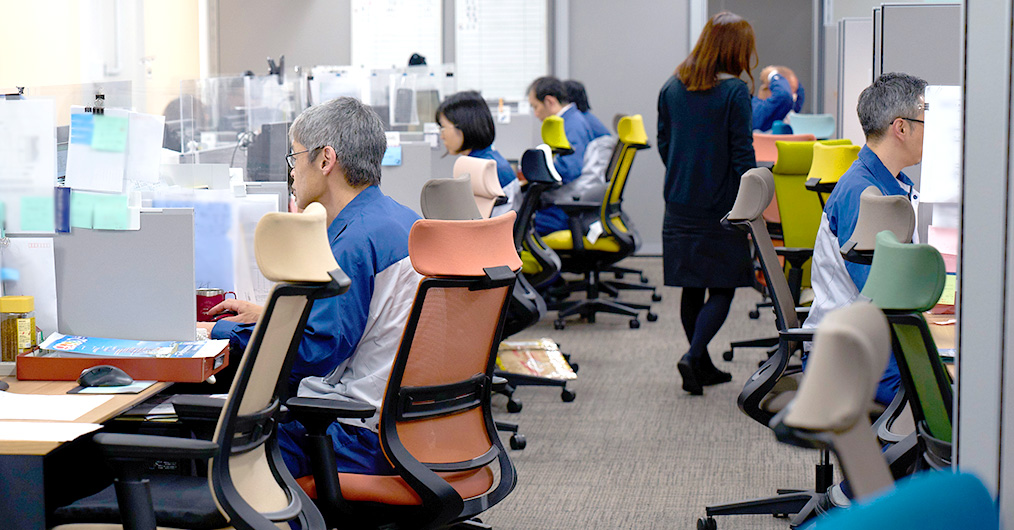
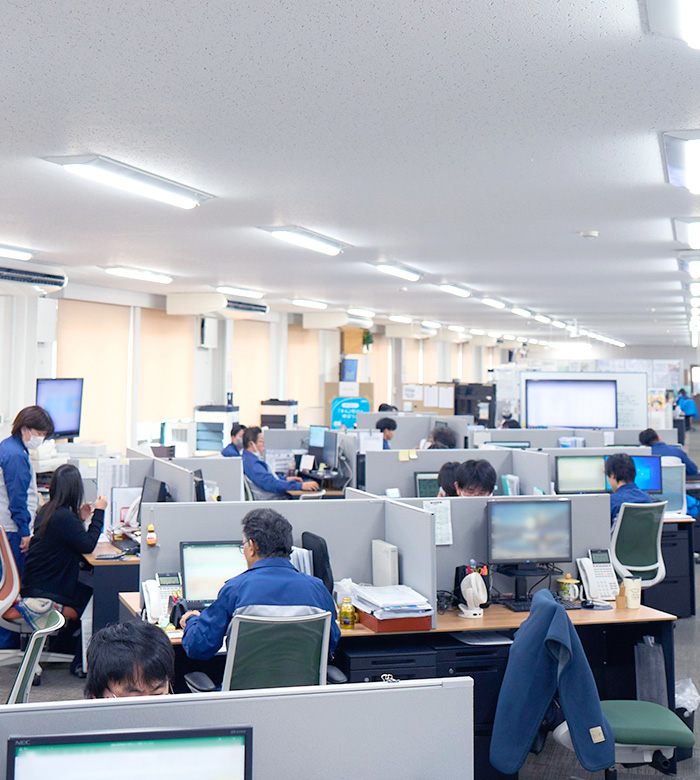
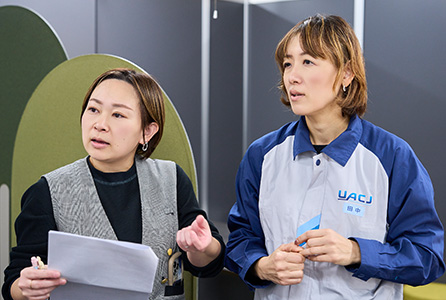
We carried out the office renovation between 2021 and 2022. Before that, the office had a very traditional, “Showa-era” layout, with teams seated in separate clusters. Because of the building’s structure, there were also aspects that felt inconvenient, so we decided improvements were needed and launched the project.

Tanaka
The Works itself is old, so the office building is also quite aged. There wasn’t much storage, and we were struggling with clutter.
Watanabe
Why were the two of you selected as project members?
Tanaka
Representatives were chosen from each team. I think the reasons we were selected included a strong desire to make the office a more comfortable place to work with our own hands, the ability to reflect requests from each department, and an attention to detail.
Watanabe
Having employees themselves involved in a renovation project is unprecedented at the Nagoya Works, isn’t it? How did you go about moving it forward?
Kato
First, we identified the issues and areas we wanted to improve, then shared our requests with the renovation contractor and decided on a theme. That theme was “communication.”
Tanaka
Because our department is involved in process control for Works operations, we have many opportunities for daily communication. We wanted an office where we could easily see one another’s faces and communicate smoothly, so that’s what we asked for.
Watanabe
I see. The finished office certainly has an interesting layout.
Kato
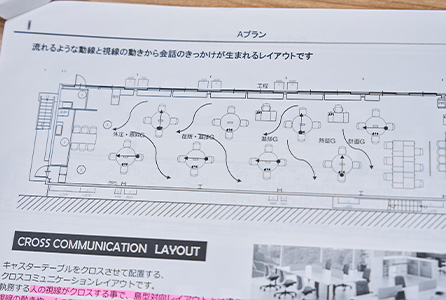
We designed it with flowing circulation paths and tables arranged diagonally so that people’s lines of sight naturally intersect and faces are visible. At the same time, gentle partitions at each desk allow people to stay focused.
Tanaka
This is the layout for our department, but other departments on the second floor have different layouts tailored to their specific work.
Watanabe
So it’s about finding what’s “optimal” from the perspective of both the people working there and the nature of the work. What other points did you focus on?
Tanaka
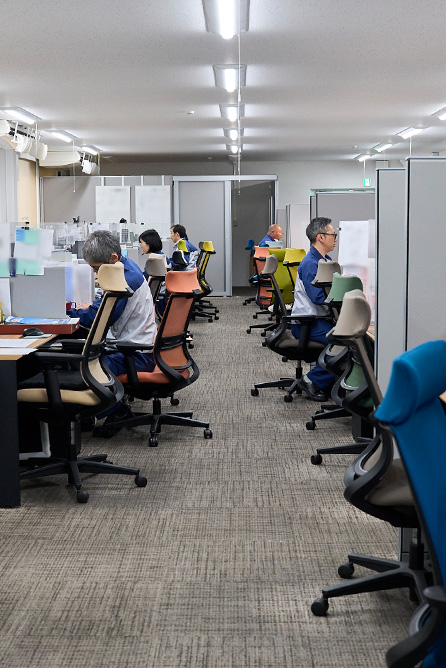
There were many. Because our department often has personnel changes, we introduced mobile wagons that make it easy to rearrange seating. We also tried to keep items like helmets, documents, trash bins, and wiring out of sight as much as possible so the office wouldn’t look cluttered. I think it’s become much cleaner and more organized than before.
Watanabe
You also conducted an engagement survey after the renovation, and the results were positive, weren’t they? Scores related to job satisfaction improved as well.
Kato
Yes. As the working environment changed, our own mindset became more positive too.
Tanaka
While we led the project, we wanted everyone working here to feel involved in the renovation, so we asked each person to choose their chair in a color they liked.
Watanabe
You’re right—I can see that!
Kato
We’d be happy if this could become a workplace where even a small part of each person’s “personal preference” is reflected.
Watanabe
Triggered by the First Flat Rolled Products project, voices calling for renovation have been rising in other offices within the Works as well. I feel this is a very symbolic initiative that truly embodies Well-being at the Works. I’m glad we had the chance to hear about it.
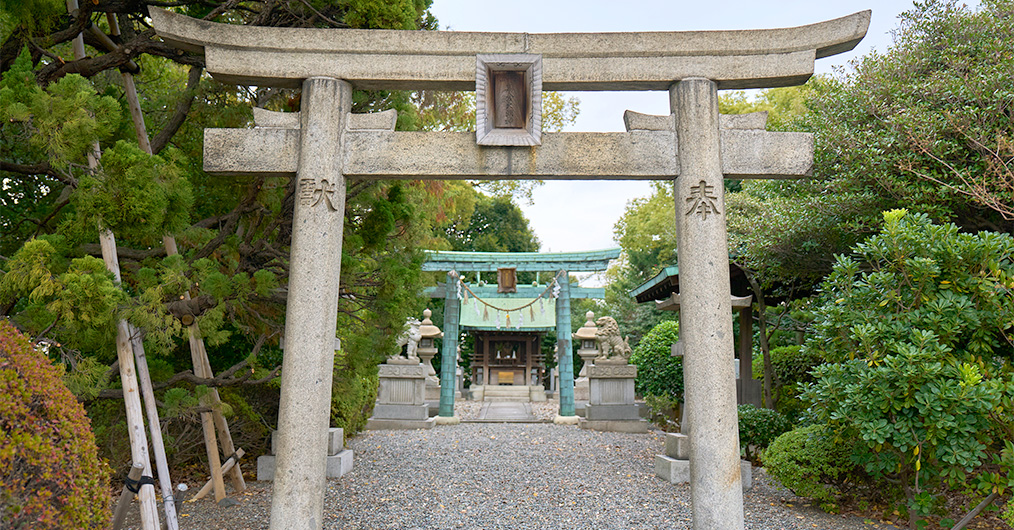
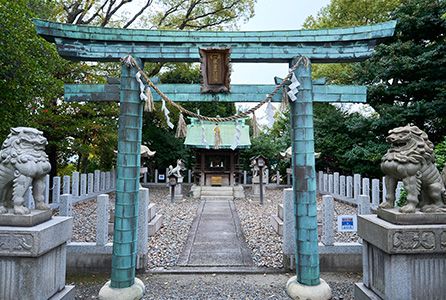
The final place we visited was a shrine located within the Nagoya Works. Why is there a shrine inside a manufacturing site? Tracing the reasons behind it reveals yet another deep connection with the local community.
The final place we visited was a shrine located within the Nagoya Works. Why is there a shrine inside a manufacturing site? Tracing the reasons behind it reveals yet another deep connection with the local community.
Inari Shrine
Featuring
UACJ
Yuzo Hakoda
Yuzo Hakoda
Why Is There a “Shrine” Inside the Works!?

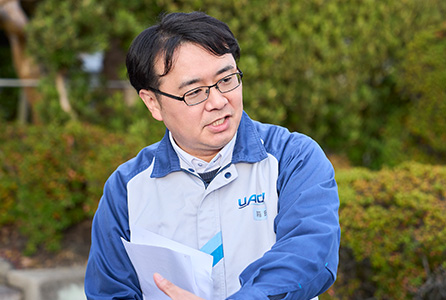
Hakoda
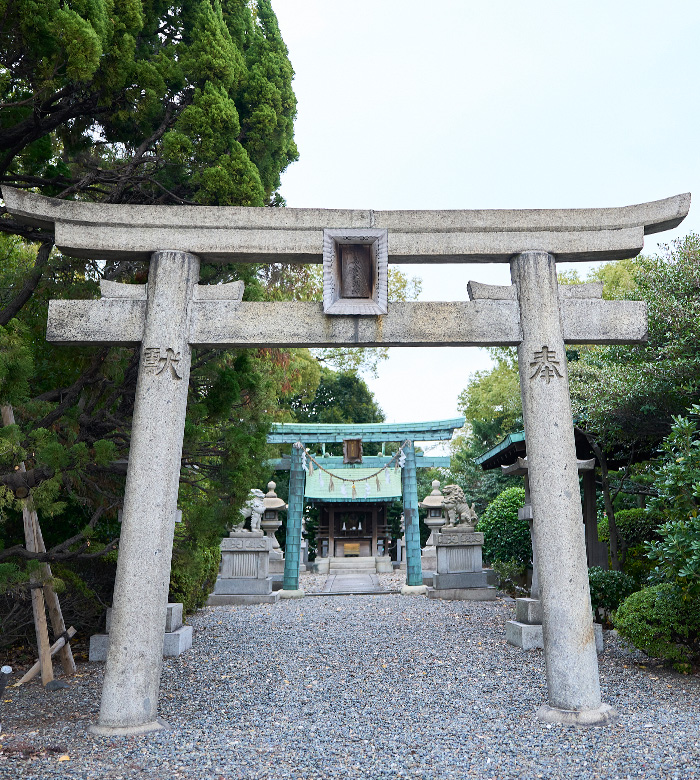
I looked into its origins, and according to records, during the days of Sumitomo Light Metal Industries—before the integration into UACJ—a deity was transferred from Takakura Inari Shrine in Osaka and enshrined here at the Nagoya Works. That was in 1960.
Watanabe
So that was more than 65 years ago—about 20 years after the Nagoya Works began operations.
Hakoda
Yes. According to the records, it was built at the request of employees of the former Sumitomo Copper Rolling Works, who prayed for the success and continued growth of the business, as well as for its protection.
Watanabe
I see—it was something the employees hoped for.
Hakoda
Around that time, the Inari Festival was held for the first time.
Watanabe
Today, the “Inari Festival” is known as a major annual event open to the local community, but originally it was a ceremony associated with this Inari Shrine.
Hakoda
Rather than a company supporting a local shrine, the company itself has a shrine, which local residents come to visit. Even today, people from the neighborhood still come here to pray.
Could You Tell Us About Events and Activities Open to the Local Community?
Hakoda
The Inari Festival we mentioned earlier is held every April. It’s a very lively event, with areas where local vegetables and fruits are sold, playground equipment set up for children, and a stage for performances.
Watanabe
We employees also look forward to it every year and really enjoy taking part.
Hakoda
Opportunities for local residents to enter the Works are rare, so you can see employees actively engaging and interacting with them.
Watanabe
It’s fun to see a different side of things—like employees serving yakisoba at the food stalls.
Hakoda
The R&D Center also sets up booths where visitors can experience aluminum, and we offer factory tours for children, creating many opportunities for people to learn about aluminum.
Watanabe
Events that connect us with the local community are something we want to continue valuing. Speaking of which, the cleanup activities at Fujimae Tidal Flats started a few years ago as well, didn’t they?
Hakoda
Yes. For the past three years, employees have been volunteering to take part in cleanup activities aimed at protecting the local environment.
Watanabe
I joined as well—with my child!
Hakoda
The Fujimae Tidal Flats are internationally recognized as a Ramsar Convention site. However, many of our employees have never actually visited the area. That’s why recently we’ve been reaching out to nearby junior high and high schools, focusing on initiatives that allow younger generations to learn about environmental issues while also giving them hands-on exposure to aluminum as a material.
Watanabe
I’d be happy if environmental activities could serve as a gateway for people to learn about aluminum and gradually become fans of aluminum. Listening to your story, I really felt that engagement with the local community isn’t about “special initiatives,” but rather the accumulation of everyday efforts. We’d like to continue sharing the values the Nagoya Works has long cherished with many more people. Thank you very much!
AFTER INTERVIEW
UACJ - Masahide Watanabe
At the UACJ Nagoya Works, we saw how sustainable manufacturing is being advanced by combining two key pillars: advanced aluminum recycling technologies and efforts to enhance workplace Well-being. Going forward, we aim to further deepen resource circulation and foster the vitality of our people, accelerating these initiatives together with all employees as we strive to become a site that contributes to the local community and the future of industry.
Profile
Caring for the atmosphere on the shop floor, the flow of materials, and people’s feelings alike, I’ve continued on this path—quietly updating the workplace a little more each day.
* The information in this article was current at the time of the interview.